
Chapter 5
Inference
- ISBN
- 978-81-963834-0-4
- Published
- 26 July 2026
- Accesses
- 2 views · 0 downloads
- Reading time
- ~23 min
Full text
IMPACT OF ENCLOTHED COGNITION ON WORKPLACE PRODUCTIVITY.
CHARANYA K , DEEKSHA N
IFIM College, Bangalore, India
Dr .JUDE ASHMI
Assistant professor, Department Of Management, IFIM College Bangalore
Abstract
Adam and Galinsky (2012) coined the term “ENCLOTHED COGNITION” and put it into a common understanding stating it as systematic influence of clothes on wearer's and viewers’ psychological process and also the change in behavioral tendencies. After that, many researchers have studied Enclothed cognition in relation to various concepts and have given measurable impact on selective qualities like attentiveness (Adam and Galinsky,2012)1, change in empathetic concern (Belen lopezperez, Tamara Ambrona ,Ellie L WILSON ,Marina khalil (2016)2,problem solving(Van Stockum and Decaro,2014)3, influence perception( Behling &Williams,1991)4,focus centric( Correll ,park ,Judd & Wittenbrink,2002;sadler,Correll,park&judd,2012)5.etc This paper consists of primary research finding through the questionnaire distribution along with other secondary research available to support our concept. This paper illustrates about the work place productivity in regards to the enclothed cognition, color of cloth having influence on cognition , judgmental view based on clothing, change of dressing style during covid pandemic, accessories and makeup being considered under enclothed cognition.
Key Words: Enclothed Cognition, workplace productivity, color cognition, physiology, professionalism.
Introduction
We often spend most of our time in digging the wardrobe to select proper outfit for the day, because consciously or subconsciously we believe the type of clothes we choose can be an expression of how we would feel. People choose to wear different kind of clothes for different activities.
For example- people are seen with formal dress like suits in working profession or for an interview, casual outfits in travelling or to take rest, bright shining outfits for party and best picked outfits for special occasions. We also tend to match our outfits with the accessories that suit the outfits. It does not end here; we also associate our clothes and accessories with our makeup to make us feel pleasant, elegant, and confident in ourselves. But there is little exception on people who prefer to be simple and natural in their own way and some stay out of box to create their own clothing style. This is because the type of clothes or the outfits we
wear outside would influence our inside feeling, thinking, helps in giving confidence and satisfaction.
We often notice that our mood changes based on type of clothes we choose to wear , example – when we put our sweat pants, track pants our mood turns up to be ready to go to gym or do work. Wearing uniform, blazer, and tie would make us feel professional and confident. Not only type of clothe even the Color of clothes also has an impact on our mental state. This is because colors can actually evoke different range of emotions like bright colored dress is associated with energetic mood and dull colors associated with relaxing mood. In fact, clothing can change our mind chemistry due to symbolic meaning that we as a society ascribe to different sorts of outfits. One of foremost researchers on enclothed cognition, Adam Galinsky said, “It has long been known that clothing affects how other people perceive us, as well as how we think about ourselves”6, knowingly or unknowingly clothes project about the role we are playing in to the outside world.
Sometimes, the dress can also define state of class, like branded dress is generally associated with high class, richness and Uniforms associated with professions. In our life we would have come across sayings like “dress for work you want; not the work you have” or” look good, feel good” or “dress for success”, “what a strange power there is in clothing” many times. The above lines are actually stating that clothing or dressing is playing some major role in reflecting our ability, personality, and mood, how others perceive us, building image etc. This is a phenomenon that is actually connected to psychological theory that clothes have to impact or influence on wearer’s mood, behavior, cognitive abilities and this theory has been coined as enclothed cognition.
Back Ground
Our motive behind choosing this topic is based on two parameters. Firstly personal interest and experiences which made us deep dive into the topic and to understand clothing psychology among management students and working professionals.Personal interest and experience involve the importance of clothing and its impacts on cognation in our daily life. As wears we came over various situations where we could find clothing influencing our behavior style and mood. And this made us to dive more into the topic and explore its influence in other qualitative measures.The reason for our other parameter is that, we researchers belong to management area so we wanted to know in particular about these peoples. As a viewer we noticed that every sector have a indicative clothing like doctor wear white cote, Police has a prescribed set of uniform but in managerial sector we don’t have a particular clothing style but formal clothing is dominant and more preferred. So we started studying on this particular area along with its psychological impacts.
Literature Review
There are many subsequent researches by other investigators regarding the theory of enclothed cognition in relation to different domains.
Saaid A. Mendoza and Elizabeth J. Parks-Stamm (2020), in their paper states the findings
between the police offices and the uniform they wear would affect the shooter task i.e. the measurement of response time they take to wear a uniform and their reaction after that.
It also says about their attitude and the power they impose by warring uniform to the public/innocents. Vikash Ramnanan(2018), this thesis stated the positive significant correlation of two components that is Enclothed Cognition & Machiavellianism. And the detailed impact it shows in today’s business world, technology and in politics. Coline Crutzen and Stephane Adam(2022), they had findings of the relationship between the symbolic representation in healthcare using uniform (white courts) and its preferences level for the old adult patients especially in nursing home.
Belen Lopez-Perez, Tamara Ambrona, Ellie L Wilson and Maria Khalil(2016), The paper clearly explained that empathetic response and helping behavior increase depending on enclothed cognition framework. They explained this by doing an experiment that wearing a tunic (loose garment) and identifying it with nursing scrub increased empathetic concern, working hours in participants compared to solely physical experience of wearing the scrub.M Orakcioglu, I Orakcioglu and B Fletcher (2016), this paper help to find the hidden detail behind the moto of wearing certain garments and there cultural relevance and it is demonstrated by the 16th century ottoman clothing. JG Lu, RE Nisbett And MW Morris(2022), It states the findings by demonstrating the psychological and behavior change in general public of china by wearing face mask during covid-19 pandemic. It’s related to the public health with their individual mental health.Hannah R Gnegy and Deborah A. Christel(2016), The paper explains garment/ textile industry targeting the plus-size middle aged women between 18-25 and professional attires they wish to choose. Also, the market strategy behind this textile industry uses to attract their customers. Charles A. Van Stockum Jr And Marci S. Decaro (2014), The paper contains experiment regarding problem solving insights and controlled attention in relation to enclothed cognition (wearing white lab court).It states that wearing white coat in regard to WMC would increase attention control towards problem solving.
From the above research articles we can know that there are various measurable qualities in relation to enclothed cognition. The works include various concepts like attitude and power in relation to uniform, symbolic representation ,clothes in regard to cultural relevance, psychological and behavioral change in relation to clothing, problem solving insights and attentiveness and many more concepts. But, these papers did not have information related to productivity in relation to clothing. So, we tried to fill this research gap by our work on productivity in relation to enclothed cognition. Our paper’s one of objective was Clothing influence on workplace productivity. Apart from it, we worked on other objective like, color of clothe having influence on cognition , judgmental view based on clothing, change of dressing style during covid pandemic, accessories and make up being considered under enclothed cognition.
Synthesis
We accumulated our research objectives from above mentioned research articles by understanding their studies (conceptual hypotheses, qualitative measures and results)
Workplace productivity –
- Police offices and the uniform they wear would affect the shooter task (Saaid A. Mendoza and Elizabeth J. Parks-Stamm (2020)).
- Regarding problem solving insights and controlled attention due to white cloth (Charles A. Van Stockum Jr And Marci S. Decaro (2014)).
- Enclothed Cognition & Machiavellianism. And the detailed impact it shows in today’s business world, technology and in politics ( Vikash Ramnanan (2018)).
- Tunic (loose garment) and identifying it with nursing scrub increased empathetic concern, working hours in participants (Belen Lopez-Perez, Tamara Ambrona, Ellie L Wilson and Maria Khalil(2016)).
Judgmental view-
- Attitude and power that police impose by wearing uniform towards the public/innocents. (Saaid A. Mendoza and Elizabeth J. Parks-Stamm (2020)).
- Detailed impact of clothing styles in today’s business world, technology and in politics. (Vikash Ramnanan(2018)).
- Relationship between the symbolic representation in healthcare using uniform (white courts) and its preferences level for the old adult patients especially in nursing home. (Coline Crutzen and Stephane Adam(2022))
Enclothed Cognition during Covid Pandemic-
- Psychological and behavior change in general public of china by wearing face mask during covid-19 pandemic (JG Lu, RE Nisbett And MW Morris(2022))
Accessories and Makeup Being Considered Under Enclothed Cognition-
- Moto of wearing certain garments and there cultural relevance and it is demonstrated by the 16th century ottoman clothing (M Orakcioglu, I Orakcioglu and B Fletcher (2016)).
Research Framework
Proposed objectives illustration-
Clothing Influence on the Workplace Productivity
When, we go out to work or for any external activity we do where clothes as our second skin which should meet our personal comfort and that would be a brand of representation of us to others and more about our personality and profession. On one hand, when it comes to few set of people, who are working in the organization, they do need match certain level of organizational dress code policies and the set of uniformity in clothing like ironed formal shirt, pant, skirts, blazers, tie, heals and shoes representing formal wear which are made for the corporate representation over period of time. Such dressing style could disturb the wearers comfort zone and creates a sense of irritations and decreases the productivity or in opposite, boost their sense of belongingness in organization helps in skill development, knowledge acquisition and gradually increases the productivity7.
On the other hand few millennium organizations or freelancers does not implicate any dress
codes or suggests the new trendy clothing style like casual-comfort clothing’s which make them feel comfortable and no restrictions in choice of their clothing which helps in more idea generation and creative thinking which benefits both organization and viewers.So such obligations of the organization norms and dress code policies affect the wearers’ psychological behavior and comfort that could affect the work productivity directly or indirectly in terms of confidence, responsibility holding, sense of unity and belongingness with co-workers, along with body language, work conscious and so on. This psychological change in the wearer’s behavior is, associate with the work that would be implementing in the cognitive behavioral changes over period of time and would influence the work productivity.
Wearers Color Choice and Its Cognitive Changes
In a vestal spectrum of colors in an individual’s day to day life we come across many colors around us from the bottom of earth to the unpredictable sky. We individuals do prefer to carry a specific choice on color that touches our heart. Colors do have the power that could affect the individual emotionally, intellectually and physically. Sometimes, it also provides confidence, feel privileged, boost motivation and makes people excited. So it’s not just in the colors around people but also in what they tend to wear7. The wearer’s personal choice would be different and unique from others could be from past choice of interest which could be from stored memories of joy, success, accidents, promotions, demotions and so on. Such choice of interest would lift the wearer’s mood, it promotes the creative feeling, helps in making statements to others and ready to act perception.This influence is made not only in the wearer’s personal life but also in professional life to create an impact in situations like meeting, presentations, get together and so on. The choice of dress color would play a very important role and helps in representing professionalism not just for the viewers but also for the wearer psychological belongings and their individual performances.
To see in particular every color has its own diplomatic meaning like, RED brings out excitement, energy, love and strength. GREEN color provides freshness, healing, nature and quality. BLUE color brings competence, loyalty, peace and trust. WHITE promotes clean, honesty, innocence, and simplicity. BLACK promotes dramatic, formality, sophistication and security. GREY color signifies calm, maturity, neutrality and reliability. today’s world most people prefer to wear black, white and blue clothing which states to represent the professionalism in the corporate world so it knowingly or unknowing signs the meaning of formality, honesty, loyalty and trust as a quality of wearers characteristics to the viewers and to themselves9 .
Judgmental View Based On Clothing
It has been a practice from past, that the way we dress is a part of how society judges or thinks about us. In general, some people perceive that the clothes people wear are indirect indication of what they are like. Sometimes, clothes acts as an instrument for some people to judge on basis of status, occupation, style etc. People have the view that if someone wears branded cloth or high priced cloth it indicates high privilege. Sometimes wearing branded cloth seems to impress others and increase a high state feeling in oneself and more trendy clothes makes people think they are fashion oriented and updated.
Clothes also indicate symbolic representation of occupation .example-seeing a person wearing white coat, people identify him as doctor. People can judge or identify our work based on clothes that we wear ,Example –wearing a formals will leave a professional image on others, seeing a person on sweat pants or track pant we assume they are workout or gym oriented persons.But, today we can see there is a lot of change in society in relation to dressing style. As before, judgmental view can’t be done in present scenario, because today people follow their own style, prioritize their comfort over luxury status and each one of them have their own way to choose clothes for better appearance. For example- In past , prior to 20 years we have seen most of big entrepreneurs, leaders, rich people wearing suits, branded clothes, but today many are breaking that style. If we see Facebook founder –Mark Zuckerberg, has his own style of dressing in only gray color T-shirts and simple trousers. Though he is very rich yet we see him in simple ordinary same type of dress. And now, people can’t say he is not rich just by seeing him simple clothes. So, we can say that today, clothes alone can’t illustrate persons personality, status accurately.
Change in Enclothed Cognition during Covid Pandemic
Covid pandemic has impacted a lot of changes in our life and one of the changes is our dressing style.We know that during covid many employees began working from home. Everyone has mainly two types of outfits that is work outfits and home outfits, but as the employees were working from home they dint really preferred work outfits at the same time they can’t be in home outfits for video conferences in working hours. This led to a new style of dressing style that is mixed attire11 –example, business tops with casual bottoms. Generally, on a large basis casual comfort was preferred by most of employees. We even saw how Mask during covid had become a new normal, it had been necessary clothing that everyone should wear when stepping out. Even, many top brands started producing masks with different prize ranges, quality, and designs 12etc.
Accessories and Makeup Being Considered Under Enclothed Cognition
It’s not just clothing that effects cognition, sometimes along with it accessories and makeup also plays a supportive role in influencing cognition. This is because every item we wear or we put on our body makes us feeling something about ourself. Sometimes accessories help in identifying profession, example-stethoscope makes us imagine doctor, paintbrush indicates painting, and laptop indicates corporate professionals.. Accessories can also influence mood
.Example- wearing glasses makes us feel smart and intellectual , wearing watch makes us time bound, smart watch makes workout people to focus, earphones makes us feel relaxed, jackets makes us feel rebel etc. Accessories like high priced phones, branded shoes, smart watches can make one feel high state or rich. Sometimes it also act as boosting confidence, for Example- a short women wearing high heels helps in increasing confidence.Make up also plays important role in presenting oneself boldly, confidently and beautifully. It’s an art which is used to build image, hide emotions, and present oneself in the way they wish. Though it’s not for all people, but for some, mainly for fashion oriented persons the 3 main essentials that they carry on themselves are accessories, makeup and clothing15. Thus today, we have style –makeup,
clothing and accessories, to make us feel bold, confident in ourselves as we move through this world.
Methodology
This research study is conducted to evaluate people’s view in relation to our objectives and to understand in detail. This study followed a quantitative and qualitative approach based data collection and analysis. A Questionnaire distribution was circulated to collect the data. The targeted participants were mostly college students and working professionals. Questionnaire was designed in a way that it had total of 31 questions among which first part consists of 5 questions which were demography and second part is the main part of questionnaire which included 26 questions related to our research objectives that were investigated. These questions were designed in different forms like some were in relation to five-point likert scale; some questions were open ended type and few included ranking and selection of options.
Data Collection And Sample Size
In this research, a well structured questionnaire was used to collect the data. The data was collected by the Google Form and the participants answered to our questions. We were able to collect a data, of total 208 responses.
Research Findings
The Demographic Data
In this study data accumulated were in total of 208. Out of 208 respondents most of the respondents 159 (76.4%) were between 18-27, 25 (12%) were between 28-37, 21 (10.1%) were between 38-47, 3 (1.4%) were between 48-57. By this analysis we could state that the majority of respondents were from age group of 18 to 27 which also states youngsters as the majority decision makers. 140 (67.7%) were female respondents and 68 (32.7%) were male respondents.
122 (58.7%) were students, 69 (33.2%) were working professionals and 17 (8.2%) did not fall in both the categories.
Results And Discussion
First objective of the paper was to find the relationship between the influences of clothing over wearer’s productivity level towards their work. So to draw the results few questions were asked to 208 respondents And their respond were like 1Q. Could clothing influence their inner strength? To this 96(46.2%) respondents agreed.(chart 1) 2Q. Does formal dress makes wearers feel uncomfortable in their work place? To this 75(36.6%) respondents Disagreed (Chart 1). 3Q. Does work productivity relays on the wearers work dress choice? For this 74(35.6%) of people Agreed that work productivity is influence one the wearers dress choice.
The followed objective was to determine the wearers color choice and its cognitive changes. For this we asked the respondents 3Q like, Q1.does dress color would influence the wearers mind set? To this 80(38.5%) stated sometimes the color would influences their mind set (chart 2). Q2.which color do wearers prefer professionally to make their mood productivity? To this majority choose blue, black and white.(chart 3)
Source: Primary data

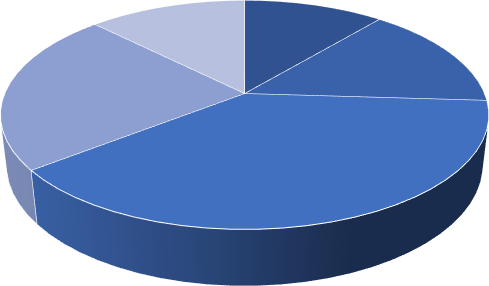
Source: Primary data
The next objective is Judgmental view based on clothing to determine these wearers were asked 3Q like, 1Q. Do wearers judge others by their dress? The responds were sometimes by 99(43.3%) (Chart4). 2Q. do people judge wearers by their dress? To this 92(44.2%) responded as sometimes (chart 4).3Q.Does branded cloth make wearers feel privileged and dignified than others? For this we got mixed respondents like 56(26.9%) agreed and 58(27.9%) disagree (chart 4).
Source: Primary data
Next objective was regarding change in enclothed cognition during covid pandemic. For this 3Q’s were asked.Q1. If there was notable change in wearers dressing style during covid time? To this 106(51%) agreed (chart 5).Q2.Did wearers preferred comfort clothing during online meetings in covid time? to this 86(41.3%) agreed.(chart 5)Q3. Did wearing mask become new normal? To this 93(44.7%) agreed.(chart 5)
Source: Primary data
The last objective is to determine accessories and make up being considered under enclothed cognition.5Q were asked.Q1.Does wearers prefer accessories to be part of their professional outfit? To this 104(50%) respondents agreed.(chart 6).Q2. Wearer’s accessories prioritization towards their professional outfit. For this most respondents preferred phones, watches, shoes. (chart7)Q3. Does makeup helps wearers to carry themselves in professional life? To this 30.8% respondents agreed and 34.1% has neutral opinion.(chart 6).
Source: Primary data
Source: Primary data
Inference
The main aim of this research was to examine clothes influence in relation to workplace productivity, wearers color choice and view on its cognition change, judgmental view on clothing, enclothed cognition during covid pandemic, accessories and make up being considered under enclothed cognition. We assumed our objectives based on our personal experiences and studying other research materials.Then by collecting data from 208 respondents and analyzing it, we got results. Further we compared the results with our objective illustration. By analyzing the results, we say that most of our respondents agreed that clothes can influence on productivity by impacting their inner strength. In our objectification formal clothing either disturbs wearers comfortness or increases their uniformity, work conscious; for this respondents disagreed the point -formal dress disturbing comfortless in workplace. About 80% of respondents agreed that color of clothe would influence their mindset, and said that blue, black and white clothes makes their mood productive in workplace. As we said in our objective illustration that judgmental view based on clothing has been changing, we saw the same response from results .People couldn’t select a proper agree or disagree, they had chosen sometimes option because we as a society had been illustrating something based on clothing, but today it has been slowly changing and people do think before judging. In pandemic time, there was notable change of dressing style, respondents preferred comfort clothing and mixed formal was in trend. Mask had become a new normal. We formulated that accessories and make up also acts in enclothed cognition, more than 50% response says that they prefer accessories to be part of their professional outfit and most people do not particularly agree that make up helps them in carrying themselves in professional life. We conclude the paper by saying that, first 4 of our objectives were correct, expected and positive result have come from respondent’s side. But, for 5th objective, we got mixed response, so it will not completely agree our objective.
Conclusion
Our outcomes says that Clothing influence on workplace productivity by inceasing their inner strength and formal dress or uniform will not make people uncomfortable.Blue, black and white color clothes are preferred more in workplace.In our survey people did not completely accept on the judgment they make on other and the judgmentally view they overcome by the type of clothe they wear. There was a new change in dressing style during pandemic.Apart from
clothes, people do give importance to accessories to be a part of their professional outfit. Most preferred accessories are phone, watch and shoes. Make up to be part of rofessional outfit is not encouraged as much as accessories and clothes.
Reference
- Adam, H., & Galinsky, A. D. (2012). Enclothed cognition. Journal of Experimental Social Psychology, 48(4), 918–925.
- López-Pérez, B., Ambrona, T., Wilson, E. L., & Khalil, M. (2016). The effect of enclothed cognition on empathic responses and helping behavior. Social Psychology.
- DeCaro, M. S. (2014). Enclothed cognition and controlled attention during insight problem-solving. The Journal of Problem Solving, 7(1), 8.
- Behling, D. U., & Williams, E. A. (1991). Influence of dress on perception of intelligence and expectations of scholastic achievement. Clothing and Textiles Research Journal, 9(4), 1-7.
- Mendoza, S. A., & Parks-Stamm, E. J. (2020). Embodying the police: the effects of enclothed cognition on shooting decisions. Psychological reports, 123(6), 2353-2371.
- The New York Times ,Mind Games: sometimes a white coat isn’t just a white coat by sandra blakeslee april 2, 2012 (https://www.nytimes.com/2012/04/03/science/clothes-and-self-perception.html)
- 3 Ways to Build a Sense of Belonging in the Workplace by Jackie Wiles and Jordan Turner April 29, 2022 (https://www.gartner.com/smarterwithgartner/build-a-sense-of-belonging-in-the-workplace)
Managing Employee Dress and Appearance (https://www.shrm.org/resourcesandtools/tools-and-samples/toolkits/pages/employeedressandappearance.aspx)
- Color Psychology – Brilliant Helping Hand in UX Design by Hossein Raspberry November 20, 2019 (https://uxstudioteam.com/ux-blog/color-psychology-in-ux-design/)
- THE IMPORTANCE OF CLOTHING IN THE BUSINESS WORLD Dress codes as a part of companies' policies byNetta Norava October 2018 thesis (https://www.theseus.fi/bitstream/handle/10024/153626/Netta_Norava.pdf?sequence=1&isAllow)
- Haute-Comfort: Consumers Choose Comfort Over Style Says New Research by Kate Hardcastle Nov 29, 2022 (https://www.forbes.com/sites/katehardcastle/2022/11/29/haute-comfort-consumers-choose-comfort-over-style-says-new-research/?sh=31b70a1120c4)
https://essayforum.com/writing/people-view-dress-style-judgement-person-based-72981/
- Coronavirus: How the world of work may change forever (https://www.bbc.com/worklife/article/20201023-coronavirus-how-will-the-pandemic-change-the-way-we-work)
https://fashionjournal.com.au/fashion/fashion-mood-psychologist/
- Masks On? What Employers Need to Know About Face Coverings at Work by Nancy Cleeland June 15, 2020 (https://www.shrm.org/resourcesandtools/hr-topics/employee-relations/pages/face-masks.aspx)
- What Your Clothes Say About You by LearnVest Apr 3, 2012
(https://www.forbes.com/sites/learnvest/2012/04/03/what-your-clothes-say-about-you/?sh=3973eaa86699)
- The State of Fashion 2022 MCKINSEY GLOBAL FASHION (https://www.mckinsey.com/~/media/mckinsey/industries/retail/our%20insights/state%20of%20fashion/2022/the
-state-of-fashion-2022.pdf)
- Why Do Women Wear Makeup? The Science Behind Makeup Obsession By Vanessa Van Edwards (https://www.scienceofpeople.com/makeup/)
- Mendoza, S. A., & Parks-Stamm, E. J. (2020). Embodying the police: the effects of enclothed cognition on shooting decisions. Psychological reports, 123(6), 2353-2371.
- Ramnanan, V. B. (2018). An Analysis of Enclothed Cognition as Related to Personality Factors and Its Interdisciplinary Implications (Doctoral dissertation).
- Crutzen, C., & Adam, S. (2022). “What if It’s not Just an Item of Clothing?”–A Narrative Review and Synthesis of the White Coat in the Context of Aged Care. Psychologica Belgica, 62(1), 62.
- Lopez-Rerez, B, Ambrona,T,Wilson E,l and Khalil, M(2016).
The effect of enclothed cognition on empathetic responses and helping behavior social psychology, 47(4),223.
- Orakcioglu, M., Orakcioglu, I., & Fletcher, B. (2016). Enclothed cognition and hidden meanings in important Ottoman textiles. TEXTILE, 14(3), 360-375.
- Lu, J. G., Nisbett, R. E., & Morris, M. W. Classification: SOCIAL SCIENCES—Psychological and Cognitive Sciences.
- Gnegy, H. R., & Christel, D. A. (2016, November). Enclothed Cognition: Professional Clothing Symbolism among Plus-Size Women Ages 18 to 24. In International Textile and Apparel Association Annual Conference Proceedings (Vol. 73, No. 1). Lowa State University Digital Press.
Get an email when we publish new research and open calls for chapters.
Create a free account