
Chapter 12
A Capability-Driven Agentic AI Framework for Autonomous Business Decision-Making: Integrating Decision Intelligence and Explainable Machine Learning
- ISBN
- 978-93-340-5069-1
- Published
- 16 September 2026
- Accesses
- 16 views · 0 downloads
- Reading time
- ~27 min
Abstract
This paper outlines and evaluates a framework for an autonomous business decision-making AI (agentic) system, which consists of four base capabilities, i.e. perceiving, reasoning, remembering, and automating actions that are theorised to improve business outcomes through enhanced decision intelligence, along with data quality as a moderating variable. An empirical study was conducted to validate the predictive ability of this framework on actual business decisions using an XGBoost regression model, which showed a strong predictive power. Sensitivity analysis using both permutation feature importance and Shapley Additive Explanations measures demonstrates that memory is the most significant predictor of decision-making results, while the reasoning, perception, and action automation capabilities are less influential, respectively. Further, these analyses provide evidence of the need for context retention and knowledge retrieval to improve decision intelligence in agentic AI systems. Directional SHAP analysis supports all four capabilities as positively impacting business outcomes. This research adds to the expanding area of agentic AI by offering a methodology for designing scalable, intelligent and efficient ways in which businesses can use their own decision systems based on data.
Keywords: Agentic AI, Business Decision-Making, XGBoost Regression, Operational Efficiency, Predictive Modelling
Full text
A Capability-Driven Agentic AI Framework for Autonomous Business Decision-Making: Integrating Decision Intelligence and Explainable Machine Learning
Khirod Chandra Maharana1, Binod Kumar2, Shrikant Upadhyay3, Kumar Amrendra4, Partha Paul5
1School of Commerce, Gangadhar Meher University, Odisha, India 2Department of CSE & IT, Jharkhand Rai University, Ranchi, Jharkhand, India
3Internal Quality Assurance Cell, MLR Institute of Technology, Hyderabad, India
4Department of CSE & IT, Jharkhand Rai University, Ranchi, Jharkhand, India
5Department of CSE, BIT Mesra (Lalpur Unit), Ranchi, Jharkhand, India
Abstract
This paper outlines and evaluates a framework for an autonomous business decision-making AI (agentic) system, which consists of four base capabilities, i.e. perceiving, reasoning, remembering, and automating actions that are theorised to improve business outcomes through enhanced decision intelligence, along with data quality as a moderating variable. An empirical study was conducted to validate the predictive ability of this framework on actual business decisions using an XGBoost regression model, which showed a strong predictive power. Sensitivity analysis using both permutation feature importance and Shapley Additive Explanations measures demonstrates that memory is the most significant predictor of decision-making results, while the reasoning, perception, and action automation capabilities are less influential, respectively. Further, these analyses provide evidence of the need for context retention and knowledge retrieval to improve decision intelligence in agentic AI systems. Directional SHAP analysis supports all four capabilities as positively impacting business outcomes. This research adds to the expanding area of agentic AI by offering a methodology for designing scalable, intelligent and efficient ways in which businesses can use their own decision systems based on data.
Keywords: Agentic AI, Business Decision-Making, XGBoost Regression, Operational Efficiency, Predictive Modelling
1. Introduction
The growth of Artificial Intelligence (AI) is changing the way businesses make decisions, specifically through the development of Agentic AI in business decision-making processes (Kostopoulos et al., 2025). The traditional approach to creating a decision support system will soon be replaced by an AI-based system. AI will execute functions autonomously, using large amounts of data and subsequently take action on behalf of the human user. On the other hand, the current systems that utilise AI for this purpose are not yet fully autonomous, because they do not have the function of integrating sensory-perceptual, logical-reasoning, memory-creating, and action-taking processes (Mahamat et al., 2024). Thus, there is an inconsistency between how AI is currently defined and how we can expect it to evolve into an agentic AI’s agent (Golec et al., 2025a). In other words, to enable an AI-based system to behave as if it were a human, AI Agentic needs to be employed to create multiple functions (Jena & Dehuri, 2020). The role of the perceptual function is to acquire and pre-process large volumes of data from multiple non-related sources to ensure that the information used as the basis for making decisions is grounded in relevant and quality information. The role of the reasoning function is to develop complex decision logic and multi-step inferences necessary for the decision-making process (Abou Ali et al., 2026; Gebretsadkan et al., 2025). The capability to automatically execute business decisions via integrated workflows connects the analysis to the execution of the decision (Hosseini & Seilani, 2025). At the same time, the concept of decision intelligence has been increasing in popularity as a way to connect data, analytics, and decision-making. Decision intelligence emphasises the quality, relevance, and contextual knowledge of the information generated by an artificial intelligence system (Maharana, Kumar, Kumar, et al., 2025). By incorporating decision intelligence into an agent-driven AI framework, business outcomes such as improved accuracy of decision-making, response time, scalability, and efficiency of operations can be achieved. However, empirical research supporting this, specifically through the use of a data-driven modelling approach, is limited. This research proposes a capability-based framework for the development of agent-driven AI systems that are capable of making autonomous business decisions. This framework conceptualises perception, reasoning, memory, and automating action as the four main independent variables that influence decision intelligence, directly affecting business decision outcomes, where the quality of the data used in the decision process is included as a moderating factor that affects the strength of the relationships between the four independent variables and decision intelligence (Smarsly, 2026a). The contributions of the present research are threefold, where the first contribution is a complete conceptual model that connects core agentic AI capabilities with decision intelligence and business outcomes, the second is empirical validation of the developed model using advanced machine learning principles, demonstrating the ability of the proposed framework to predict the outcome of business decisions. The third contribution of this research is the identification of the relative importance of the various agentic AI capabilities. In terms of enhancing decision performance, demonstrating that memory and reasoning are the most significant contributors to enhancing decision performance in the decision-making process.
2. Review of Literature
Artificial Intelligence (AI) is considered one of the most important components of a data-driven decision-making process in today's modern organisations. Earlier decision support systems were primarily built using rule-based logic and statistical models (Chopra, 2019). With the introduction of machine learning and deep learning algorithms, the ability to predict and prescribe outcomes has improved significantly (Lai et al., 2023). AI is able to improve the accuracy of decisions, reduce time to complete a decision, and provide scalable solutions to several different industries, including finance, supply chain management, and health care (Cheng & Jiang, 2020). Although advancements have been made with AI, many AI systems are still limited to a single task and do not have the capability of autonomously managing the end-to-end process of making decisions (Singh & Abraham, 2008). Agentic artificial intelligence represents a new research area that is aimed at creating AIs as independent agents. These agents can perceive their surroundings, think through and solve difficult problems it remembers what context they are in; and take actions based on those experiences (Rahman et al., 2026). Earlier research proposed that Agentic AIs should use modular architecture; however, the majority of the research conducted thus far has been merely conceptual or technical, with very little empirical testing (Hosseini & Seilani, 2025). Furthermore, there are no standardised frameworks that enable the measurement of the effect on the outcome of each capability. Decision Intelligence (DI) as an inter-field (cross-field) area has drawn recent interest by combining data science, artificial intelligence (AI) and decision theory. It focuses on improving the quality and effectiveness of decisions through the combination of analytics with contextual knowledge to support the delivery of better-informed and timelier decisions (Maharana, Kumar, Guru, & Upadhyay, 2025). Decision Intelligence contributes positively to organisational performance through enhanced use of both analytics and knowledge-based inputs from DI to obtain optimal organisational performance by making better-informed and timely decisions (Golec et al., 2025b). Currently, most existing research has been focused on merely analytics pipelines and/or Analytics Visualisation tools with little emphasis on the use of DI as part of an autonomous AI system (Kandepu & Harry, 2023). The current relationship between agentic AI capabilities and DI has not been adequately studied. While there is an extensive use of explainable AI in predictive analytics, the use of explainable AI to evaluate agentic artificial intelligence frameworks or capability-driven systems is far less common (Maharana, Kumar, Guru, Behera, et al., 2025). Current research regarding Artificial Intelligence (AI) and large language models tends to focus on different aspects of each component independently as opposed to an integrated agency framework that considers AI’s ability to perceive, reason, remember and take action on autonomous decision-making(Goel et al., 2022). A majority of those frameworks are typically of a conceptual nature and not extensively validated empirically with the use of either numerical or model-based techniques (Lin et al., 2024). The mediating function of decision intelligence is still being explored. Additionally, there is not enough analytical work regarding the relative contribution of an individual's capabilities. Finally, while there are many explainable A.I. methods of validating frameworks, the moderating effect of data quality has not been extensively researched. This research works to fill the voids noted earlier through proposing and validating an empirically-based, capability-driven agentic AI Construction where Decision Intelligence as an intermediary construct and Data Quality variables are employed as a moderating variable in this study using advanced machine-learning and Explainable AI techniques.
3. Research Objectives and Hypotheses
To examine the effect of agentic AI capabilities: Perception Capability (PC), Reasoning Capability (RC), Memory Capability (MC), and Action Automation Capability (AAC) on Decision Intelligence (DI)
To analyse the impact of Decision Intelligence (DI) on Business Decision Outcomes (BDO), including decision accuracy, response time, scalability, and operational efficiency, and to examine its mediating role.
To evaluate the moderating effect of Data Quality (DQ) and to assess the relative importance of agentic AI capabilities in influencing Business Decision Outcomes.
H1: Agentic AI Capabilities have a significant effect on Decision Intelligence
H2: Decision Intelligence has a significant effect on Business Outcomes.
H3: Data Quality (DQ) positively moderates the relationship between agentic AI capabilities and BDO
4. Materials and Methods
The framework of the present study measures the impact of 4 agentic AI capabilities: perception capability (PC), reasoning capability (RC), memory capability (MC) and action automation capability (AAC) on business decision-making outcomes, with Decision Intelligence (DI) as a mediating construct and data quality (DQ) as a moderating variable. The data analysed for this study consists of structured performance indicators that measure operational characteristics of each of the capabilities as they relate to decision-making processes. The data used in this study is derived from a simulated agentic AI environment. The dataset consists of system-generated observations representing the performance of perception, reasoning, memory, and action automation capabilities across multiple decision-making scenarios. An XGBoost regression model has been used to empirically validate the proposed agentic AI framework due to its established robustness as well as its ability to effectively model structured datasets (Arif Ali et al., 2023; Ke et al., 2017). The dataset was divided into training and testing datasets to evaluate the generalisation ability of the model, and multiple evaluations of its predictive accuracy were made. Numerous evaluations were made to ensure that predictive accuracy was measured comprehensively. Furthermore, explainable artificial intelligence techniques were used to aid in the interpretation of the model and to inform analysts on the capability contributions made by each capability. In order to assess the relative importance of each predictor variable, permutation feature importance was used to evaluate the effect of randomly shuffling the values of each predictor variable on the performance of the model. The entire analysis was performed using the Python programming language and the xgboost, scikit-learn, pandas, numpy, and shap libraries. This composite approach to methodology serves to provide not only high predictive capacity but also high levels of interpretability, giving credence to the validation of the agentic AI framework.
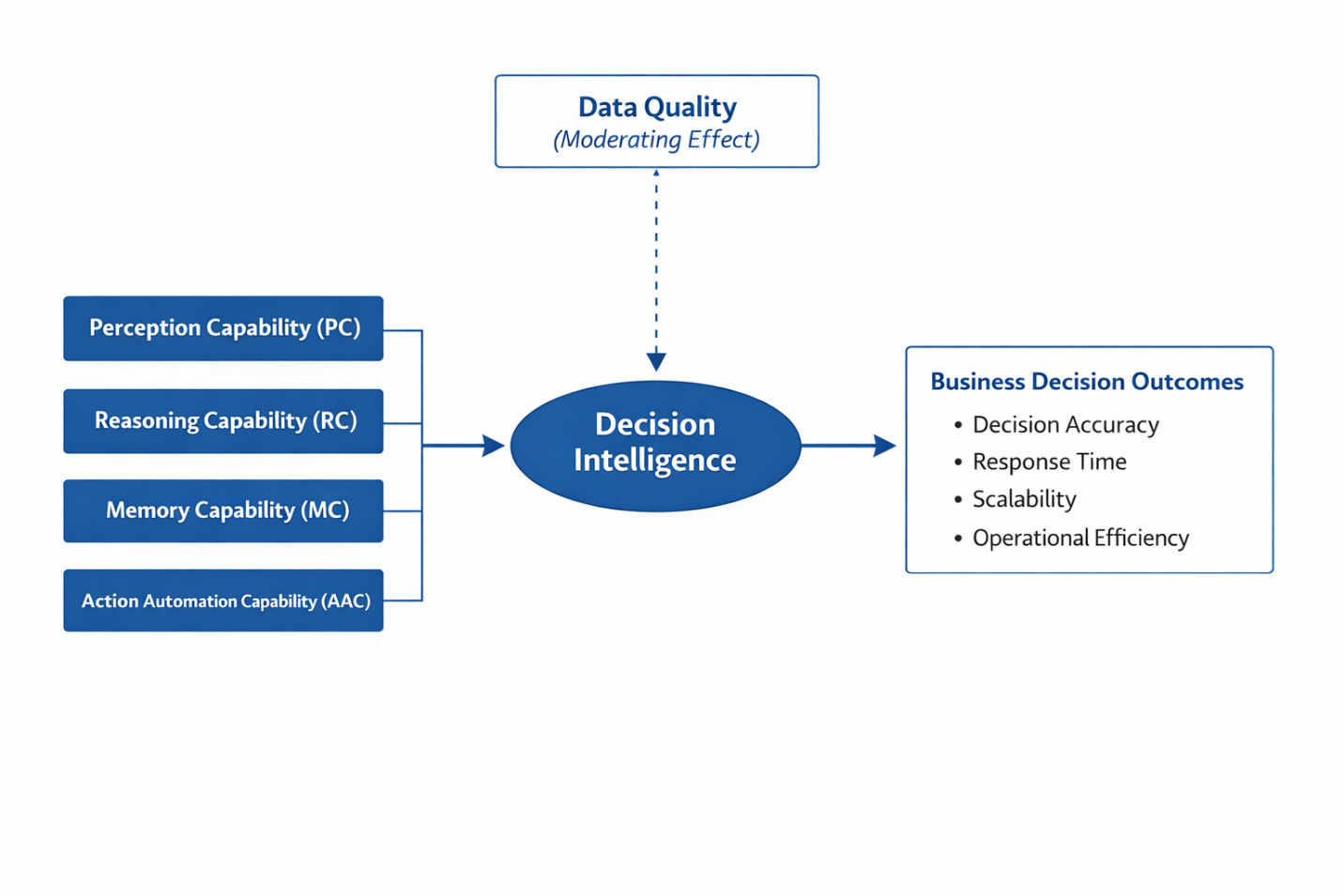
Figure 01: Conceptual Framework
Figure 01 shows that agentic AI capabilities, i.e. Perception, Reasoning, Memory, and Action Automation, collectively influence Decision Intelligence. Decision Intelligence, in turn, drives key Business Decision Outcomes such as accuracy, response time, scalability, and efficiency. Data Quality acts as a moderating factor, affecting the strength of the relationship between capabilities and decision intelligence.
5. Results and Discussion
Table 01: Model: XGBoost Regression
| Metric | Estimate | Std Error | Mtry | Trees | Min N | Tree Depth | Learn Rate | Loss Reduction |
|---|---|---|---|---|---|---|---|---|
| rmse | 0.185 | 0.0172 | 4 | 119 | 8 | 8 | 0.0936 | 0.00147 |
Table 01 summarises the XGBoost regression model. The result was a well-balanced model of 119 trees with a maximum depth of 8, with a learning rate of 0.0936. This particular configuration produced an RMSE of 0.185 (±0.0172), providing evidence of reasonably stable performance across the various validation folds throughout the process (Collins et al., 2021a). The low RMSE values, along with small standard error values, help demonstrate the high levels of stability and consistency of the model.
| Table 02: Summary Results | |||||
|---|---|---|---|---|---|
| Dataset | RMSE | MAE | MPE | MAPE | SMAPE |
| Train | 0.134 | 0.0491 | -0.451 | 1.60 | 1.39 |
| Test | 0.200 | 0.0785 | -1.380 | 3.17 | 2.52 |
Table 02 illustrates the rise of RMSE from 0.134 (training) to 0.200 (testing), indicating that the model has generalised well with relatively little overfitting. Low MAE confirms that the predicted errors are relatively small around their actual values (Bhaskar Acharya et al., 2016; Maharana & Acharya, 2023). Negative MPE values suggest a slight bias towards predicting values that are lower than what was actually found (Maharana Kumar Kumar et al 2025). Low MAPE and SMAPE (<5%) indicate that the model's predictions are highly accurate, making it very reliable for use in decision-support systems.
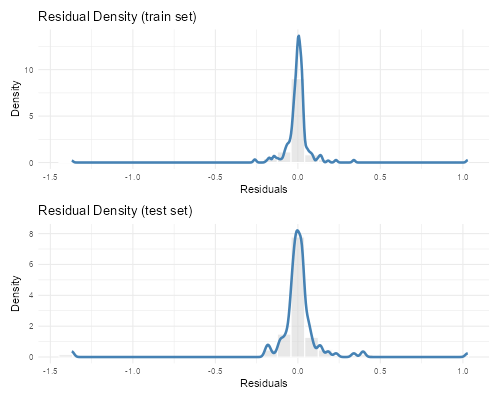
Figure 02: Residual Distribution Plot
Figure 02 depicts that the residuals are expected to be approximately normally distributed around zero. This indicates that the model captures most of the underlying patterns. Errors are random and not systematic. Absence of skewness or heavy tails suggests no major model bias (Khan & Al-Habsi, 2020a).
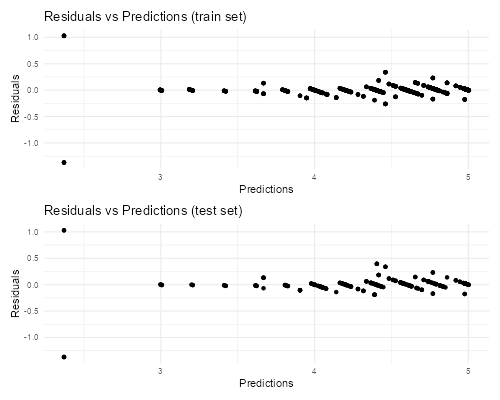
Figure 03: Residuals vs Prediction
As shown in figure 03, the residual plots should display a random pattern indicating no presence of heteroscedasticity and a lack of invisible non-linear relationships (Pati, 2025). The random nature of the residual plot supports the appropriateness and reliability of the model.

Figure 04: Observed vs Prediction
Figure 04 indicates that actual and predicted values are in strong agreement, as points are very close together and on the 45 ° diagonal line. In addition to confirming high predictive accuracy and a strong fit to the model, Minor deviations indicate acceptable levels of predictive error (Håkansson & Phillips-Wren, 2024). Residual plots show that model errors are randomly distributed without the presence of any pattern, indicating a well-fitted model (Lu et al., 2026a). Both plots demonstrate that residuals are fairly evenly distributed across the range of predicted values, indicating little or no systematic bias and confirming that this model captures the underlying relationships in the data. All plot results support the robustness and reliability of the model as an accurate predictor.
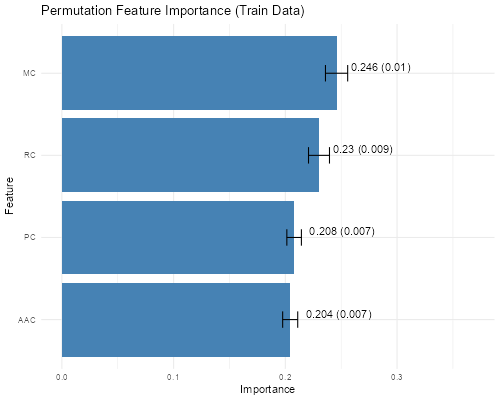
Figure 05: Permutation Features Importance
Figure 05 presents the bar graph measuring the relative importance of each permutation feature. MC is rated as the feature contributing most to the model, followed in decreasing order by RC, PC, and AAC. The differences between PC and AAC are small compared to MC, which is clearly identified as the top variable. Overall, the data presented in the chart supports the contention that cognitive abilities have considerably more of an impact on the outcome of business decisions.
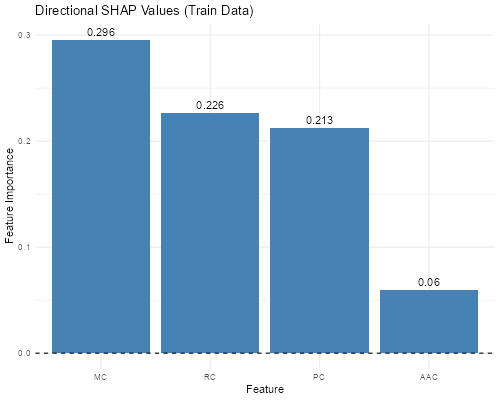
Figure 06: Directional SHAP
Figure 06 provides insights into the directional SHAP importance bar chart. Memory Capability has the greatest positive influence on business decision outcomes; Reasoning Capability and Perception Capability have a lesser, although still positive, influence, while Action Automation Capability has a substantially reduced effect. Therefore, the directional SHAP importance bar chart affirms that, relative to operational capabilities, cognitive capabilities are the primary means for achieving decision intelligence.
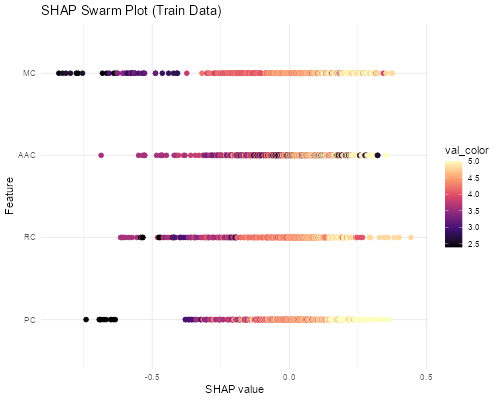
Figure 07: Swarm Plot
From Figure 07, it is evident that the Memory Capacity (MC) has the greatest variation in spread and the strongest impact on model predictions, as shown by the maximum positive SHAP values associated with it. Reasoning Capability (RC) also has a positive contribution to the model’s decision outcome, as evidenced by its many instances of data points on the positive sides of SHAP values (Lu et al., 2026b). Perception Capability (PC) has a moderate positive contribution to the decision, whereas Action Automation Capability (AAC) is less influential (Saxena et al., 2025). Each of the four factors positively influences decision-making; however, it appears that MC and RC are the dominant variables, demonstrating the importance of cognitive abilities over execution ability in driving intelligent decision outcomes.
| Table 03: Permutation Feature Importance | ||
|---|---|---|
| Feature | Mean Importance | SD |
| MC | 0.246 | 0.00994 |
| RC | 0.230 | 0.00938 |
| PC | 0.208 | 0.00651 |
| AAC | 0.204 | 0.00674 |
Table 03 highlights the results of the permutation feature importance, demonstrating that the highest-ranked feature is Memory Capability (MC) with a value of 0.246, followed closely by both Reasoning Capability (RC) and Perception Capability (PC), which each have scores of 0.230 and 0.208, respectively. Action Automation Capability (AAC) ranks fourth with a score of 0.204. Therefore, emotional expectation and rationale, as cognitive abilities (memory and reasoning), have a greater influence on an individual's decision-making process in a business environment than visual perception, manual execution or emotional conditioning (Rahman et al., 2026). Standard deviations across all three features also support consistent and accurate results.
| Table 04: Shapley Additive Explanations Table | |||
|---|---|---|---|
| Feature | Mean Abs SHAP | SD | Directional SHAP Importance |
| MC | 0.150 | 0.00533 | 0.2957 |
| AAC | 0.118 | 0.00364 | 0.0600 |
| RC | 0.115 | 0.00435 | 0.2263 |
| PC | 0.113 | 0.00413 | 0.2128 |
Table 04 also reports that the Memory Capability (MC) has a strong positive influence on business decisions, with its overall impact of 0.150 and directional influence of 0.2957. Action Automation Capability (AAC) has an overall impact of 0.118, but its directional influence is only 0.0600, suggesting it has a minimal directional influence on outcomes. Reasoning Capability (RC) at 0.115 and Perception Capability (PC) at 0.113 have a moderate influence on outcomes, but directionally, their effects are consistently positive (Ren et al., 2025). The low standard deviations indicate the results are consistent and reliable.
| Table 05: Mediation Estimates | ||||
|---|---|---|---|---|
| Effect | Estimate | SE | Z | p |
| Indirect | -0.101 | 0.0149 | -6.78 | <.001 |
| Direct | 1.203 | 0.0187 | 64.45 | <.001 |
| Total | 1.102 | 0.0118 | 93.18 | <.001 |
The results of Table 05 indicate that the directly affecting business decision results through a strong positive association (1.203) with AI Capabilities show strong evidence of a direct effect (p < 0.001). Additionally, the use of the mediator (DI) has an indirect negative effect (-0.101) on business decision results, which is statistically significant at the p < 0.001 level, indicating that Decision Intelligence will slightly decrease the size of the overall effect of AIC on outcomes (Bandi et al., 2025). The overall effect will still be positive (1.102) and statistically significant (p < 0.001), supporting the research findings that AIC significantly affects outcomes (Cakici & Tekeli, 2022). This represents partial competitive mediation, where the effect of the mediator reduces the strength of the direct association, but does not completely diminish the association.
| Table 06: Path Estimates | ||||||
|---|---|---|---|---|---|---|
| Estimate | SE | Z | p | |||
| AIC | → | DI | 0.799 | 0.0205 | 39.06 | <.001 |
| DI | → | BDO | -0.126 | 0.0183 | -6.88 | <.001 |
| AIC | → | BDO | 1.203 | 0.0187 | 64.45 | <.001 |
As shown in Table 06, the AI Capabilities (AIC) is a strong (0.799, p < .001), positively related variable that enhances Decision Intelligence. Decision Intelligence is a slight negative (0.126, p < .001) related variable that represents a small decrease in Decision Outcomes. AIC is directly related to Decision Outcomes positively (1.203, p < .001). Therefore, AIC improves Decision Intelligence positively, while the negative relationship between Decision Intelligence and Decision Outcomes indicates a negative indirect relationship.
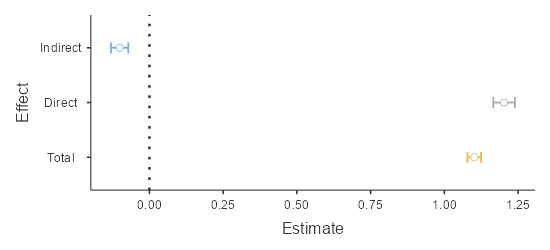
Figure 08: Estimate Plot
Figure 08 reflects the estimated plot, which shows a visual representation of how the three types of effects affect the outcome of the AI Capabilities. The largest of these three effects is the Direct Effect, which is clearly positive. The Total Effect is somewhat smaller than the Direct Effect; however, it still has a positive value. The Indirect Effect is the smallest of the three effects and is distinctly to the left of zero based on the volume of the error associated. Therefore, based on these results, it's clear that business decisions are primarily impacted by the AIC through the Direct Effect (Ahn et al., 2006) and that the Decision Intelligence has a small, negative, inverse mediating effect (Smarsly, 2026b). This indicates that while AIC helps to improve DI, the interaction between DI and the outcomes has a relatively small negative impact on the overall effect of AIC on business decision-making.
| Table 07: Moderation Estimates | ||||
|---|---|---|---|---|
| Estimate | SE | Z | p | |
| AIC | 0.6987 | 0.0253 | 27.64 | <.001 |
| DQ | 0.0496 | 0.0148 | 3.35 | <.001 |
| AIC ✻ DQ | -0.0542 | 0.0139 | -3.89 | <.001 |
Table 07 clearly demonstrates that AIC is significantly and positively related to the dependent variable (Estimate = 0.6987, p < .001), which means that high AIC increases the overall improvement in decision outcomes (Manyanga et al., 2022). Additionally, DQ also positively and significantly correlates to decision outcome performance (Estimate = 0.0496, p < .001), which suggests that higher-quality data leads to improved performance outcomes. However, the interaction term between AIC and DQ is significantly negatively related (Estimate = -0.0542, p < .001), which also demonstrates the influence of the moderating effect. Specifically, AIC and DQ negatively interacted; as DQ increased, the strength of the relationship between AIC and the dependent variable also decreased, which indicates that there is a diminishing marginal effect of AIC when the DQ is high.
| Table 08: Simple Slope Estimates | ||||
|---|---|---|---|---|
| Estimate | SE | Z | p | |
| Average | 0.699 | 0.0253 | 27.6 | <.001 |
| Low (-1SD) | 0.740 | 0.0208 | 35.6 | <.001 |
| High (+1SD) | 0.658 | 0.0327 | 20.1 | <.001 |
Table 08 outlines additional clarity on the process of moderation: (low DQ): at (-1 SD), the impact of AIC on decision outcome was greatest (0.740); at average DQ: the impact of AIC on decision outcome was moderate (0.699); and at high DQ: the impact of AIC on decision outcome was least (0.658). All results were statistically significant (p < .001). Overall, as the data quality improved, the effect of AI Capability on decision outcomes decreased, demonstrating that the previously identified negative moderation holds.
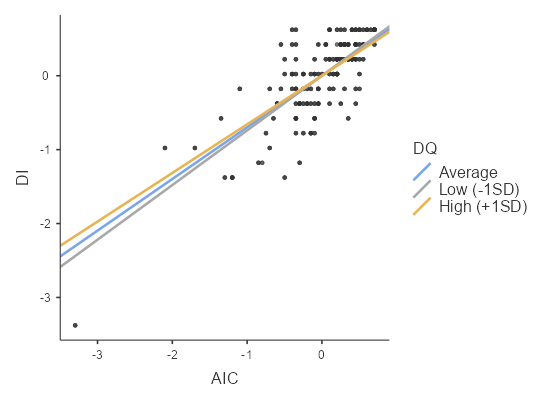
Figure 09: Simple Slop Plot
Figure 09 visually captures the simple slope graph, which supports the above findings: AIC showed a positive linear relationship with the outcome for all three DQ levels (low, average, and high). The steeper slope of low DQ displays the most significant relationship (effect) between AIC and the outcome, while the flatter slope of high DQ marks a lesser relationship (effect) between AIC and the outcome.
6. Findings and Implications
The XGBoost model provides a high level of predictive accuracy with low levels of error and excellent generalisation. The framework proposed successfully accounts for the outcomes of the business decisions (Khan & Al-Habsi, 2020b). Memory Capability (MC) continues to be the leading influence based on permutation importance (PI). Reasoning Capability (RC) has the second greatest effect and supports the theory that effective decision making requires multi-step reasoning (Nisa et al., 2025). Perception Capability (PC) yields a positive but smaller effect, demonstrating that data acquisition and data processing are a requirement; however, they alone are not sufficient (Bergin et al., 2015). Action Automation Capability (AAC) has the least amount of effect on business decision outcomes (Arif Ali et al., 2023). The SHAP analysis demonstrates that all four cognitive capabilities positively impact business decision outcomes, which supports the validity of the theoretical model proposed (Tripathy & Maharana, 2015). The XGBoost model has relatively low standard deviations and well-behaved residuals, indicating that the output produced by the model is stable, reliable and free from major biases and is not subject to overfitting (Zdravkova & Ilijoski, 2025). The study demonstrates the effectiveness of the agentic AI framework, showing that integrated capabilities are key drivers of the outcome of decisions (Ibrahim Adedeji Adeniran et al., 2024). Results from the mediation analyses showed a partial yet competitive mediation effect, with DI slightly moderating the overall effect of AI capability on outcomes. The indirect effect was found to be less than that of the direct effect. Results from the moderation analyses indicated that DQ had a significant moderating effect on AI capability and its relationship with the outcome. The effect of AI capability was greater at lower levels of DQ and less at higher levels of DQ. DI may not always lead to better results, indicating some complex dynamics are at play (Golec et al., 2025b). The effect of AI is more significant in cases with low-quality data than in cases with high-quality data. Organisations need to focus on improving data quality while also improving the basic AI functions to provide maximum benefit. Businesses should invest in Memory systems and advanced reasoning models. Action automating workflows (AAC) is not enough without robust cognitive capabilities (Banerjee et al., 2023; Collins et al., 2021b). Design decisions based on cognitive AI systems will result in improved accuracy and efficiency in making decisions. Decision makers should consider developing their AI capabilities rather than individual tools. Strategic emphasis should be placed on data-driven, context-aware systems as a means of increasing competitive advantage. Organisations will also be able to use this model to benchmark and understand their AI maturity level.
7. Conclusion and Suggestions
This research proposed an empirically validated framework for agentic AI for autonomous business decision-making. The capability-driven agentic AI framework consists of four core capabilities that have a direct impact on business decision-making outcomes via decision intelligence: perception, reasoning, memory, and action automation. The findings were derived from an XGBoost regression model and were supported by explainable AI techniques with solid predictive accuracy, and confirmed the validity of the proposed framework. Collectively, the data demonstrates that cognitive capabilities associated with context retention and intelligent reasoning have more significant effects on improving the outcome of the decision-making process than those capabilities associated with executing or performing a function. Organisations must invest in advanced memory architectures like knowledge graphs, vector databases, and retrieval-augmented generation systems to support better context awareness and quality of evidence for decision-making purposes. Future systems should also use more advanced reasoning techniques, including multi-step inferences and hybrid AI techniques, to improve decision intelligence. Instead of creating independent component solutions, organisations can build fully integrated agentic AI systems that deliver perception, reasoning, memory and action in an integrated manner. Future research will validate the proposed framework with multiple applications of research across varying industries, including health care, finance and supply chain, in order to improve generalizability. Additionally, include in future studies elements such as trust, explainability, and human-AI collaboration in order to enhance the framework. Future efforts could utilise longitudinal research designs or controlled experimental designs to further establish causal relationships between variables.
References
Abou Ali, M., Dornaika, F., & Charafeddine, J. (2026). Agentic AI: a comprehensive survey of architectures, applications, and future directions. Artificial Intelligence Review, 59(1). https://doi.org/10.1007/s10462-025-11422-4
Agentic AI: A Quantitative Analysis of Performance and Applications. (2025). Journal of Advances in Artificial Intelligence, 3(2), 132–140. https://doi.org/10.18178/jaai.2025.3.2.132-140
Ahn, J. H., Han, S. P., & Lee, Y. S. (2006). Customer Churn Analysis: Churn determinants and mediation effects of partial defection in the Korean mobile telecommunications service industry. Telecommunications Policy, 30(10–11), 552–568. https://doi.org/10.1016/j.telpol.2006.09.006
Arif Ali, Z., H. Abduljabbar, Z., A. Tahir, H., Bibo Sallow, A., & Almufti, S. M. (2023). eXtreme Gradient Boosting Algorithm with Machine Learning: a Review. Academic Journal of Nawroz University, 12(2), 320–334. https://doi.org/10.25007/ajnu.v12n2a1612
Bandi, A., Kongari, B., Naguru, R., Pasnoor, S., & Vilipala, S. V. (2025). The Rise of Agentic AI: A Review of Definitions, Frameworks, Architectures, Applications, Evaluation Metrics, and Challenges. In Future Internet (Vol. 17, Number 9). Multidisciplinary Digital Publishing Institute (MDPI). https://doi.org/10.3390/fi17090404
Banerjee, S., Dunn, P., Conard, S., & Ng, R. (2023). Large language modeling and classical AI methods for the future of healthcare. Journal of Medicine, Surgery, and Public Health, 1, 100026. https://doi.org/10.1016/j.glmedi.2023.100026
Bergin, S., Mooney, A., Ghent, J., & Quille, K. (2015). Using Machine Learning Techniques to Predict Introductory Programming Performance. International Journal of Computer Science and Software Engineering (IJCSSE), 4(12), 323–328. www.IJCSSE.org
Bhaskar Acharya, D., Member, S., & Kuppan, K. (2016). Agentic AI: Autonomous Intelligence for Complex Goals-A Comprehensive Survey. IEEE Access, 4(1), 1–25. https://doi.org/10.1109/ACCESS.2024
Cakici, A. C., & Tekeli, S. (2022). The mediating effect of consumers’ price level perception and emotions towards supermarkets. European Journal of Management and Business Economics, 31(1), 57–76. https://doi.org/10.1108/EJMBE-12-2020-0344
Cheng, Y., & Jiang, H. (2020). AI-Powered mental health chatbots: Examining users’ motivations, active communicative action and engagement after mass-shooting disasters. Journal of Contingencies and Crisis Management, 28(3), 339–354. https://doi.org/10.1111/1468-5973.12319
Chopra, K. (2019). Indian shopper motivation to use artificial intelligence: Generating Vroom’s expectancy theory of motivation using grounded theory approach. International Journal of Retail and Distribution Management, 47(3), 331–347. https://doi.org/10.1108/IJRDM-11-2018-0251
Collins, C., Dennehy, D., Conboy, K., & Mikalef, P. (2021a). Artificial intelligence in information systems research: A systematic literature review and research agenda. International Journal of Information Management, 60. https://doi.org/10.1016/j.ijinfomgt.2021.102383
Collins, C., Dennehy, D., Conboy, K., & Mikalef, P. (2021b). Artificial intelligence in information systems research: A systematic literature review and research agenda. International Journal of Information Management, 60. https://doi.org/10.1016/j.ijinfomgt.2021.102383
Gebretsadkan, Y. G., Dejene Tegegne, B., Merawi, D. S., & Meshesha, M. (2025). Large Language Model (LLM) based Question and Answering System (QAS): A systematic literature review. 259–263. https://doi.org/10.1109/ict4da67218.2025.11282707
Goel, Richa., Baral, S. Kumar., & Venkatesh, Ramamurthy. (2022). Artificial intelligence and digital diversity inclusiveness in corporate restructuring. Nova Science Publishers, Inc.
Golec, M., Hatay, E. S., Gill, S. S., & Buyya, R. (2025a). Artificial Intelligence (AI): Foundations, trends and future directions. Telematics and Informatics Reports, 20. https://doi.org/10.1016/j.teler.2025.100265
Golec, M., Hatay, E. S., Gill, S. S., & Buyya, R. (2025b). Artificial Intelligence (AI): Foundations, trends and future directions. Telematics and Informatics Reports, 20. https://doi.org/10.1016/j.teler.2025.100265
Håkansson, A., & Phillips-Wren, G. (2024). Generative AI and Large Language Models - Benefits, Drawbacks, Future and Recommendations. Procedia Computer Science, 246(C), 5458–5468. https://doi.org/10.1016/j.procs.2024.09.689
Hosseini, S., & Seilani, H. (2025). The role of agentic AI in shaping a smart future: A systematic review. In Array (Vol. 26). Elsevier B.V. https://doi.org/10.1016/j.array.2025.100399
Ibrahim Adedeji Adeniran, Christianah Pelumi Efunniyi, Olajide Soji Osundare, & Angela Omozele Abhulimen. (2024). Implementing machine learning techniques for customer retention and churn prediction in telecommunications. Computer Science & IT Research Journal, 5(8), 2011–2025. https://doi.org/10.51594/csitrj.v5i8.1489
Jena, M., & Dehuri, S. (2020). Decision tree for classification and regression: A state-of-the art review. In Informatica (Slovenia) (Vol. 44, Number 4, pp. 405–420). Slovene Society Informatika. https://doi.org/10.31449/INF.V44I4.3023
Kandepu, R. K., & Harry, A. (2023). The rise of AI in Content Management: Reimaging Intelligent Workflows. American Journal of Engineering, Mechanics and Architecture, 1(7), 78–85. www.grnjournal.us
Ke, G., Meng, Q., Finley, T., Wang, T., Chen, W., Ma, W., Ye, Q., & Liu, T.-Y. (2017). LightGBM: A Highly Efficient Gradient Boosting Decision Tree. Neural Information Processing Systems, 1–9. https://github.com/Microsoft/LightGBM.
Khan, A. I., & Al-Habsi, S. (2020a). Machine Learning in Computer Vision. Procedia Computer Science, 167, 1444–1451. https://doi.org/10.1016/j.procs.2020.03.355
Khan, A. I., & Al-Habsi, S. (2020b). Machine Learning in Computer Vision. Procedia Computer Science, 167, 1444–1451. https://doi.org/10.1016/j.procs.2020.03.355
Kostopoulos, G., Gkamas, V., Rigou, M., & Kotsiantis, S. (2025). Agentic AI in Education: State of the Art and Future Directions. IEEE Access, 13, 177467–177491. https://doi.org/10.1109/ACCESS.2025.3620473
Lai, C. Y., Cheung, K. Y., & Chan, C. S. (2023). Exploring the role of Intrinsic motivation in ChatGPT adoption to support active learning: An extension of the Technology Acceptance Model. Computers and Education: Artificial Intelligence, 5. https://doi.org/10.1016/j.caeai.2023.100178
Lin, Q., Chen, W., Zhao, X., Zhou, S., Gong, X., & Zhao, B. (2024). Research on a price prediction model for a multi-layer spot electricity market based on an intelligent learning algorithm. Frontiers in Energy Research, 12. https://doi.org/10.3389/fenrg.2024.1308806
Lu, C., Lu, C., Lange, R. T., Yamada, Y., Hu, S., Foerster, J., Ha, D., & Clune, J. (2026a). Towards end-to-end automation of AI research. Nature, 651(8107), 914–919. https://doi.org/10.1038/s41586-026-10265-5
Lu, C., Lu, C., Lange, R. T., Yamada, Y., Hu, S., Foerster, J., Ha, D., & Clune, J. (2026b). Towards end-to-end automation of AI research. Nature, 651(8107), 914–919. https://doi.org/10.1038/s41586-026-10265-5
Mahamat, A. A., Boukar, M. M., Leklou, N., Celino, A., Obianyo, I. I., Bih, N. L., Stanislas, T. T., & Savastanos, H. (2024). Decision Tree Regression vs. Gradient Boosting Regressor Models for the Prediction of Hygroscopic Properties of Borassus Fruit Fiber. Applied Sciences (Switzerland), 14(17). https://doi.org/10.3390/app14177540
Maharana, K. C., & Acharya, S. C. (2023). Exploring Consumer Loyalty towards Sambalpuri Handloom: A Structural Equation Modeling Approach. Orissa Journal of Commerce, 44(1), 27–43. https://doi.org/10.54063/ojc.2023.v44i01.03
Maharana, K. C., Kumar, B., Guru, S., Behera, B. P., & Upadhyay, S. (2025). Synergizing Customer Convenience and Fraud Prevention: Strategies for Sustainable Digital Payments to Enhance Satisfaction. 547–562. https://doi.org/10.2991/978-94-6463-787-8_43
Maharana, K. C., Kumar, B., Guru, S., & Upadhyay, S. (2025). Integrating Artificial Intelligence with Indian Knowledge Systems: A Bibliometric Study on Sustainable Management Practices. The Asian Thinker, (25), 2582–1296.
Maharana, K. C., Kumar, B., Kumar, P., Upadhyay, S., & Hinz, B. R. (2025). Optimizing Handloom Price Prediction: Leveraging Diverse Features for Superior Accuracy Using Machine Learning. Communications in Computer and Information Science, 2549 CCIS, 92–104. https://doi.org/10.1007/978-3-032-06198-0_7
Manyanga, W., Makanyeza, C., & Muranda, Z. (2022). The Effect of Customer Experience, Customer Satisfaction and Word of Mouth Intention on Customer Loyalty: The Moderating Role of Consumer Demographics. Cogent Business and Management, 9(1), 1–20. https://doi.org/10.1080/23311975.2022.2082015
Nisa, U., Shirazi, M., Saip, M. A., & Pozi, M. S. M. (2025). Agentic AI: The age of reasoning—A review. In Journal of Automation and Intelligence. KeAi Communications Co. https://doi.org/10.1016/j.jai.2025.08.003
Pati, A. K. (2025). Agentic AI: A Comprehensive Survey of Technologies, Applications, and Societal Implications. 13(1), 151824–151837.
Rahman, S., Hosain, M. T., Fahad, N., Morol, M. K., & Hossen, M. J. (2026). Agentic artificial intelligence is the future of cancer detection and diagnosis. In Array (Vol. 29). Elsevier B.V. https://doi.org/10.1016/j.array.2025.100676
Ren, Y., Liu, Y., Ji, T., & Xu, X. (2025). AI Agents and Agentic AI–navigating a plethora of concepts for future manufacturing. Journal of Manufacturing Systems, 83, 126–133. https://doi.org/10.1016/j.jmsy.2025.08.017
Saxena, R., Singh, S., & Dubey, P. (2025). Comparative analysis of large language models for the application of scientific article summarization. Procedia Computer Science, 259, 532–542. https://doi.org/10.1016/j.procs.2025.04.002
Sharma, A., Amrendra, K., & Ranjan, P. (2025). Comparative analysis of ensemble classifiers over machine learning classifiers for early software quality prediction. In Proceedings of the Recent Advances in Artificial Intelligence for Sustainable Development (RAISD 2025) (pp. 351–366). Atlantis Press. https://doi.org/10.2991/978-94-6463-787-8_29
Singh, A., & Abraham, A. (2008). Neuro linguistic programming: A key to business excellence. Total Quality Management and Business Excellence, 19(1–2), 141–149. https://doi.org/10.1080/14783360701602353
Smarsly, K. (2026a). On the Vulnerability of Citation Metrics in the Era of Generative Artificial Intelligence. Publications, 14(2), 23. https://doi.org/10.3390/publications14020023
Smarsly, K. (2026b). On the Vulnerability of Citation Metrics in the Era of Generative Artificial Intelligence. Publications, 14(2), 23. https://doi.org/10.3390/publications14020023
Tripathy, P. C., & Maharana, K. C. (2015). Effectiveness of Creativity and Innovation in Advertising - An Empirical Analysis towards Changing Market Attitude. Management Today, 5(1). https://doi.org/10.11127/gmt.2015.03.06
Zdravkova, K., & Ilijoski, B. (2025). The impact of large language models on computer science student writing. International Journal of Educational Technology in Higher Education, 22(1). https://doi.org/10.1186/s41239-025-00525-1
Get an email when we publish new research and open calls for chapters.
Create a free account