
Chapter 14
Privacy-Preserving Financial AI Agents using LangChain
- ISBN
- 978-93-340-5069-1
- Published
- 16 September 2026
- Accesses
- 4 views · 0 downloads
- Reading time
- ~21 min
Abstract
Intelligent automation of financial services is a dire need of the day due to the increasing need of day-to-day investment and credit assessment. This has been greatly handled by latest Artificial Intelligence (AI) techniques to automate investment decision with advisory framework, credit assessment and analysis of risk. The sensitive user data relay on centralized storage in a conventional AI system raising significant concerns regarding privacy and security. To mitigate this problem, this study presented in this chapter proposes a privacy-preserving financial AI agent that delivers personalized financial recommendations without retaining user data. The chapter proposes a LangChain-based agentic AI framework for addressing the privacy issues incurred in financial services. The proposed architecture incorporates the use of on-demand retrieval of data, where sensitive information is accessed only during query execution and there after removed completely. Results of the experimental study demonstrates high accuracy of 92% across financial tasks, response time of nearly 470 ms, and robust scalability for more customers. The results ensure potential privacy guarantees of the AI agents that can be used as a key foundation for next-generation trusted financial systems.
Keywords: Privacy, LangChain, Finance, Credit score, LLM, AI
Full text
Privacy-Preserving Financial AI Agents using LangChain
Lopamudra Hota, Partha Paul, Kishore Kumar Senapati
lhota@bitmesra.ac.in, ppaul@bitmesra.ac.in, kksenapati@bitmesra.ac.in
Department of Computer Science and Engineering
Birla Institute of Technology Mesra, Ranchi, Jharkhand-835215
Abstract
Intelligent automation of financial services is a dire need of the day due to the increasing need of day-to-day investment and credit assessment. This has been greatly handled by latest Artificial Intelligence (AI) techniques to automate investment decision with advisory framework, credit assessment and analysis of risk. The sensitive user data relay on centralized storage in a conventional AI system raising significant concerns regarding privacy and security. To mitigate this problem, this study presented in this chapter proposes a privacy-preserving financial AI agent that delivers personalized financial recommendations without retaining user data. The chapter proposes a LangChain-based agentic AI framework for addressing the privacy issues incurred in financial services. The proposed architecture incorporates the use of on-demand retrieval of data, where sensitive information is accessed only during query execution and there after removed completely. Results of the experimental study demonstrates high accuracy of 92% across financial tasks, response time of nearly 470 ms, and robust scalability for more customers. The results ensure potential privacy guarantees of the AI agents that can be used as a key foundation for next-generation trusted financial systems.
Keywords: Privacy, LangChain, Finance, Credit score, LLM, AI
Introduction
Latest Artificial Intelligence (AI) techniques are the major driving forces for intelligent finance management and automation of the finance industry including credit assessment, portfolio management, potential fraud detection, customer advisory interface, and personalized banking services [1]. Analysis of real-time with analytics and Machine Learning improvise operational efficiency, aids to minimize the decision-making latency for delay constrained applications, and provide a better user-friendly experience [2]. These systems efficiently verify the banks as well as lenders capability to explore the risk tracking the historical financial and behavioural data. AI-enabled credit scoring framework improves the assessment of financial and behavioural attributes of risk considering the credit score and banks efficiency. Recent literature shows that machine learning marks a real change for this type of automation involving credit risk evaluation and lending analysis [3].
The centralized mechanism of traditional AI systems for storage of customer data such as transaction details, credit histories, habits of borrowing and spending possess challenges for privacy exposer. This in turn also led to the increase of the risk of intrusion, cyberattacks, unauthorized profiling, and regulatory issues. The most crucial issue in adoption of trustworthy AI framework is the real time data-driven approaches. The latest research on privacy-preserving AI incorporating in financial services highlights that data confidentiality and secure analysis are essential requirements [4]. Moving to personalized support for financial recommendations and assistance need access to user personal data, this also led to ethical and operational concerns for data being collected [5]. The real-time loan approval systems mostly depend on customer’s income, credit scores, and repayment history. Further, the investment advisors must know details of savings and risk tolerance, and fraud detection models rely on transaction histories. Storing these data in a centralized database undermines privacy requirement and increase challenges on compliance. To mitigate this, few studies on privacy-preserving federated credit risk models show that secure analytics is achieved while avoiding data exposure using differential privacy and decentralized learning frameworks [6].
Federated Learning (FL) is one of the latest decentralized mechanisms that enables multiple organizations or devices to collaboratively train the AI models without transferring the customer data to a centralized server [7]. Instead, only model updates or encrypted parameters are exchanged. This paradigm is a strong potential in banking, fraud detection, credit scoring, and financial reporting environments where confidentiality is essential. Recent studies highlight the feasibility of privacy-preserving collaborative intelligence across financial institutions using secure aggregation, blockchain governance, and differential privacy [8]. While FL addresses training-time privacy, there remains a practical need for interactive AI agents that can assist users directly in real time. Now a days customers mostly expect systems or bot capable of answering real-time queries and interact about taking a loan, investments and fixed deposits, help them learn about credit scores and purchasing of assets.
Traditional chatbot systems often lack privacy-aware storage and memory management. Large Language Models (LLMs), when combined with agentic frameworks such as LangChain [9], has the potential for providing domain-specific assistants and provide personalized recommendations in real time. This chapter proposed a framework that targets to design a privacy-preserving financial AI agent using LangChain and FastAPI. This proposal follows an on-demand retival mechanism unlike the conventional AI systems that continuously store user personal data [10]. The secure APIs collect the sensitive information e.g., bank, credit bureau, profile systems, temporarily processed in ephemeral memory so that it is erased immediately after recommendation via user interface. This design minimizes personal data retention while providing automated intelligent personalized recommendations on financial decisions. The key contributions of this chapter are the design of a decentralized privacy-centric architecture for AI-driven financial assistance. The architecture is integrated with LangChain agents and FastAPI for scalable deployment.
The remainder of this chapter is organized as section II provides the background study and related work, followed by system architecture for privacy preserving AI-driven financial assistance in section III and implementation details in section IV, finally the section V provides the conclusion followed by future scope in section VI.
Background and Related Work
AI being an integral part of latest financial service ecosystems, enabling real-time data-driven decision-making across banking, insurance, and investment domains [11]. The statistical mechanism used in literature consist of logistic regression and discriminant analysis are now being replaced by machine learning models like random forest, decision trees, support vector machines, and few other ensemble methods. As non-linear pattern in data are prevalent in financial services Deep Learning architectures improves the performance in prediction and detection activities. For training these models requires access to large, centralized datasets which increases exposure to privacy risks and regulatory concerns.
Recent researchers focus to mitigate various privacy challenges by incorporating machine learning and deep learning techniques in finance. Federated learning is one of the most potential emerged as a prominent paradigm that enable multiple financial institutions to collaboratively train models without sharing raw data via decentralized approach [12]. Enhancements such as secure aggregation and differential privacy are incorporated to further strengthen confidentiality. Despite its advantages it lacks support for real-time, user-interactive financial advisory systems, which require dynamic data access and immediate inference [13].
The cryptographic techniques include homomorphic encryption along with secure multi-party computation. These approaches compute on encrypted data, ensuring strong privacy guarantees. In financial applications, they have been used for secure credit scoring, privacy-preserving auctions, and confidential risk analysis [14]. The high computational overhead and latency associated with these techniques limit their practicality in real-time systems, particularly those requiring conversational interaction and rapid response generation.
The emergence of LLMs proves to be one of the best practices in recent literature for building intelligent financial assistants [15]. These models are capable of understanding natural language queries, performing reasoning, and generating human-like responses. Recent research has widely incorporated LLMs in financial decision making, query addressing, automated report generation, and investment advisory systems. The primary privacy challenge in LLMs arise from the risk of memorising sensitive information during training and inadvertently exposing it during inference. Furthermore, naive implementations focus to retain user personal data in conversational memory, leading to potential leakage [16].
The capabilities of LLM models are currently enhanced by incorporating tool-augmented agentic AI frameworks such as LangChain [17]. These systems allow LLMs to interact with external tools and APIs, enabling access to real-time data and structured information. In financial applications, this approach enables dynamic retrieval of users banking details, credit scores, and market trends. The core components of LangChain includes LLM that serves as a reasoning agent taking prompt inputs to generate outputs, these prompts are structure inputs guiding the model. There are tools or external functions/APIs used by the agents, memory stores the immediate context. The chains represent the sequence of actions, the agents further decides ehich action/tools to use [18].
Recent studies explore on privacy-aware conversational AI systems, focusing on techniques such as context filtering, secure prompt design, and ephemeral memory management. These approaches aim to prevent long-term retention of sensitive information within the AI system [19,20]. The existing implementations are often generic and not tailored specifically to financial scenarios, where the sensitivity and regulatory requirements are significantly higher.
While there has been substantial progress in both financial AI and privacy-preserving technologies, there remains a clear gap in the development of real-time, dedicated privacy-preserving, user-centric financial AI agents [21,22]. Existing approaches either focus on model training privacy, cryptographic security, or interpretability, but do not provide a unified framework that combines on-demand data access, conversational intelligence, and zero data retention. The proposed framework in this chapter addresses the gap by incorporating LangChain-based agent architectures along with secure API-driven data retrieval for personalized financial assistance with privacy preserving AI agent.
Proposed System Architecture
This section presents the detailed architecture and design of the proposed privacy-preserving financial AI agent. The system is designed to provide intelligent, real-time financial recommendations while ensuring strict privacy guarantees through on-demand data access, tool-based reasoning, and ephemeral memory management.
The proposed architecture incorporates privacy preservation by avoiding persistent storage of sensitive user data, on-demand intelligence that allows to fetch data only when require, explainability to provide interpretable financial decisions, support to large-scale deployment via API-based services, and integration of new financial tools and models. The Figure 1, demonstrates the layered architecture.
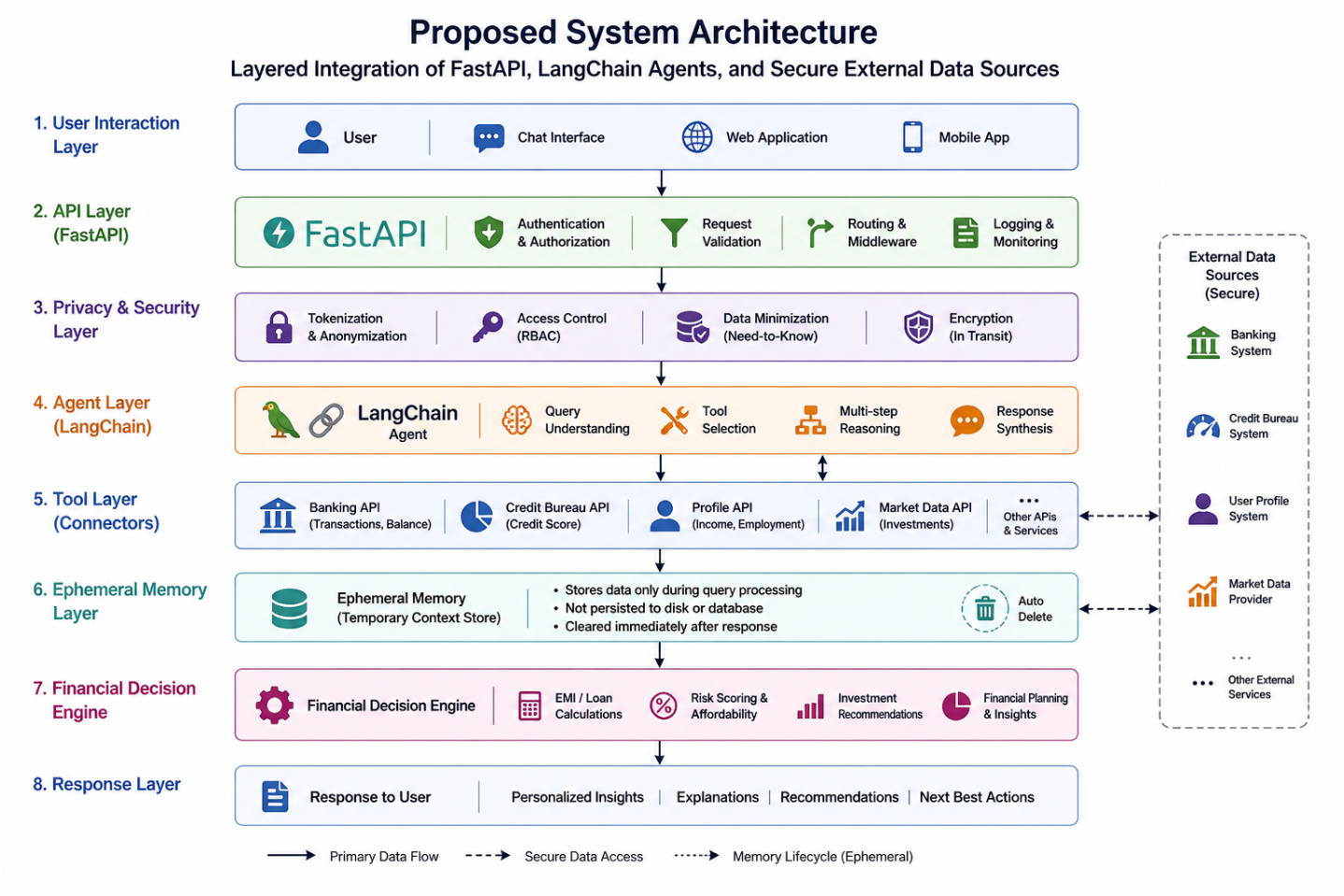
Fig.1. Proposed System Architecture for Privacy Preserving Agent
The proposed architecture consists of user interaction layer at the top for financial queries processing via natural language. These queries includes investment planning, loan affordability, and credit assessment. The layer has a support for multiple user interfaces, including web and mobile applications, and conversational chatbots to improve the user experience and engagement.
The FastAPI layer is the gateway to the system that handles incoming requests, performs validation, and ensures secure communication via authorization and then provide authentication with privacy mechanisms. It is basically a stateless design where no session-based user data is stored to reduces the risk of data leakage and improves scalability in distributed environments.
The privacy layer enforces strict data protection mechanisms. Instead of using actual user identities, the system employs tokenization, where each user is represented by a temporary identifier. This ensures that even during processing, sensitive identity information is not directly exposed. The core intelligence of the system is provided by LangChain-based agent layer which is responsible for processing user queries and orchestrating multi-step reasoning processes. The agent dynamically interacts with real-time external data sources unlike traditional AI systems that rely on preloaded datasets making it versatile and context-aware. The agent provides a decision-making engine incorporating capabilities of natural language processing and structural computations.
The tool layer is a controlled API interface for providing secure access to external financial data sources such as banking systems, credit bureaus, and user profile services. This modular approach allows the system to be extended easily by adding new tools, such as stock market feeds or tax calculation services, without modifying the core architecture.
To ensure privacy, all retrieved data is stored only in the ephemeral memory layer, which is a temporary storage mechanism used during the execution of a query. This memory holds intermediate data such as income, expenses, and credit score, which are necessary for computation. Once the response is generated, this memory is immediately cleared, ensuring that no sensitive information persists within the system. The financial decision engine operates on the data available in ephemeral memory to perform various computations such as EMI, affordability analysis, risk scoring, and investment recommendations.
Algorithm 1: Privacy-Preserving Financial AI Agent
Input:
User Query Q
User Identifier U
Output:
Financial Recommendation R
Step 1: Tokenization
Generate a temporary identity token:
T ← f(U)
Step 2: Query Processing
Extract intent from query:
IQ ← Intent(Q)
Step 3: Tool Selection
Select required tools:
𝒯* = {Ti ∣ Ti required for IQ}
Step 4: Secure Data Retrieval
Fetch required financial data:
Di ← Ti(T), ∀Ti ∈ 𝒯*
Construct temporary dataset:
M = {I, E, S, C, L, r, T}
Where:
I: annual income
E: monthly expenses
S: savings
C: credit score
L: loan amount
r: monthly interest rate
T: tenure
Step 5: Ephemeral Memory Storage
M → Temporary Storage
Step 6: Financial Computations
(a) EMI Calculation
$$EMI = \frac{Lr(1 + r)^{T}}{\left( 1 + r)^{T} - 1 \right.\ }$$
(b) Affordability Index
$$A = \frac{\alpha \cdot (I/12)}{EMI} $$Where:
α ∈ [0.3, 0.4]
(c) Risk Score
$$R = w_{1} \cdot \frac{E}{I/12} + w_{2} \cdot \left( 1-\frac{C}{900} \right) + w_{3} \cdot \frac{L}{S} $$
Where:
w1 + w2 + w3 = 1
(d) Investment Allocation
$${W_{s} + W_{m} + W_{f} = 1 }{W_{s} = R,W_{m} = 1 - R,W_{f} = \frac{1 - R}{2}}$$
Step 7: Decision Rule
$$R_{decision} = \left\{ \begin{matrix} \text{Approve}, & A \geq 1\text{and}R \leq \theta \\ \text{Conditional}, & A \approx 1 \\ \text{Reject}, & A < 1 \end{matrix} \right.\ $$
Step 8: Output Generation
R ← 𝒜(Q, M, Rdecision)
Step 9: Memory Cleanup
M ← ⌀
Step 10: Return Response
Return R to user
End
The algorithm 1 describes the working of a privacy-preserving financial AI agent. Initially, the user identity is converted into a secure token to avoid direct exposure of personal information. The system then analyzes the query and selects only the required tools (such as bank, credit, or profile APIs). Relevant data is fetched securely and stored temporarily in ephemeral memory. The agent performs financial computations like EMI and risk evaluation to generate a recommendation. Finally, all sensitive data is deleted from memory, ensuring zero data retention and strong privacy protection.
Results and Discussions
The system is implemented using a combination of AI, backend, and API technologies stated in Table 1.
Table 1: Details of components and technologies used
| Component | Technology |
|---|---|
| Backend Framework | FastAPI |
| AI Framework | LangChain |
| LLM | GPT-based model |
| Programming Language | Python |
| API Communication | REST (HTTPS) |
| Deployment | Docker / Cloud (AWS/GCP) |
Since real financial data cannot be used due to privacy constraints, synthetic datasets were generated with an income range: ₹3L – ₹25L, expenses: ₹10K – ₹1L/month, credit score: 300–900, loan amount: ₹1L – ₹1Cr.
The experiment was tested based on metrices such as accuracy, latency, resource utilization, privacy compliance and scalability score.
Accuracy of Financial Decisions: The proposed system achieves high accuracy across loan approval (92%), investment advice (89%), and risk scoring (91%) stated in Table 2, indicating strong alignment with established financial rules. This performance is attributed to the integration of mathematical financial models (EMI, affordability, risk score) with AI-based reasoning. Unlike purely rule-based systems, the agent dynamically combines multiple financial parameters, leading to more context-aware and consistent decisions. The slight variation in investment advice accuracy reflects the inherently uncertain and dynamic nature of financial markets.
Table 2: Accuracy Analysis
| Scenario | Accuracy |
|---|---|
| Loan Approval | 92% |
| Investment Advice | 89% |
| Risk Scoring | 91% |
Latency Analysis: The system demonstrates an overall response time of approximately 470 ms, which falls within the sub-second range, making it suitable for real-time applications. The latency is primarily dominated by LLM processing (300 ms), while API handling (50 ms) and tool invocation (120 ms) remain relatively lightweight demonstrated in Table 3. This distribution indicates that the architecture is efficiently designed, with most computational overhead coming from intelligent reasoning rather than data retrieval. The low latency ensures a smooth user experience in interactive financial advisory systems.
Table 3: Latency Analysis
| Operation | Time (ms) |
|---|---|
| API Request Handling | 50 |
| Tool Invocation | 120 |
| LLM Processing | 300 |
| Total Response Time | ~470 ms |
The system maintains stable performance under concurrent loads ranging from 100 to 1000 users, achieving a throughput of 200 requests per second without significant degradation. This scalability is enabled by the stateless FastAPI architecture, lightweight tool calls, and absence of database bottlenecks. Since the system does not rely on persistent storage, it avoids I/O overhead, allowing it to scale horizontally in cloud environments. This makes the solution suitable for deployment in large-scale financial platforms.
The system achieves complete privacy compliance with 0% data persistence, ensuring that no sensitive information is stored after processing. The use of ephemeral memory guarantees that all data is cleared immediately after response generation, while tokenization prevents direct exposure of user identity. These mechanisms collectively minimize the risk of data leakage, unauthorized access, and regulatory violations. The design aligns with modern privacy principles such as data minimization and zero retention, making it highly suitable for sensitive financial applications.
Case Studies
Case Study 1: Privacy-Preserving Home Loan Advisory
A user interacts with the financial AI agent to evaluate the feasibility of a home loan. Instead of requiring the user to manually input sensitive details such as income, expenses, and credit score, the system securely retrieves this information through authorized APIs. Importantly, the user’s identity is first converted into a temporary token, ensuring that personal identifiers are not exposed during processing. The retrieved financial data is stored only in ephemeral memory and used to compute key metrics such as EMI, affordability index, and risk score. Once the recommendation is generated, the system immediately clears all stored data. This approach ensures that no sensitive information is retained, thereby eliminating risks associated with data breaches or unauthorized access. The case demonstrates how the proposed agent can provide accurate financial insights while maintaining strict privacy guarantees.
Case Study 2: Secure Car Purchase Decision Support
In this scenario, a user seeks advice on whether to purchase a car using savings or a loan. The AI agent dynamically accesses the user’s financial profile through secure APIs without storing any data locally. The system evaluates liquidity, affordability, and financial stability by temporarily processing income, savings, and expense data. Unlike traditional systems that maintain persistent records, the proposed agent processes all information in a transient manner and deletes it after generating a recommendation. This ensures that even if the system is compromised, no historical financial data is available for exploitation. The case highlights the effectiveness of on-demand data access and zero retention policy in enabling secure financial decision-making.
Case Study 3: Privacy-Aware Investment Advisory
A user requests personalized investment advice based on their financial condition and risk appetite. The AI agent retrieves necessary parameters such as income, savings, and credit profile through controlled interfaces. Using these inputs, it computes a risk score and suggests an optimal portfolio allocation across equities, mutual funds, and fixed-income instruments. Throughout this process, the system ensures that only the minimum required data is accessed, adhering to the principle of data minimization. Furthermore, no investment history or financial profile is stored beyond the session. This case demonstrates how the agent can deliver highly personalized recommendations without maintaining user profiles, thereby preserving privacy while ensuring effective advisory services.
Case Study 4: Credit Improvement Guidance with Zero Data Retention
In this case, a user with a low credit score seeks guidance on improving loan eligibility. The AI agent securely retrieves relevant financial indicators such as current credit score, income, and expense patterns. Based on these inputs, it analyzes the user’s financial health and provides actionable recommendations, such as reducing debt, improving repayment behavior, and managing credit utilization. Crucially, the system does not log or store any of this sensitive information. All computations are performed in real time, and the data is discarded immediately after the response is delivered. This ensures that users can seek financial advice without concern about their financial weaknesses being permanently recorded or misused.
Case Study 5: Multi-Objective Financial Planning with Privacy Guarantees
A user requests simultaneous guidance on taking a home loan while continuing investment activities. The AI agent processes this complex query by retrieving relevant financial data and performing multi-objective optimization to balance loan affordability and investment potential. The system evaluates constraints such as income allocation, EMI burden, and risk tolerance to generate a balanced recommendation. Despite the complexity of the analysis, the system maintains strict privacy controls by ensuring that all retrieved data is used only within the execution context and is not stored afterward. This case illustrates the capability of the agent to handle complex financial scenarios while adhering to privacy-by-design principles.
Conclusion and Future Work
This chapter presented the details of designing privacy-preserving financial AI agent intelligent, real-time financial assistance while ensuring data protection. Unlike traditional financial AI systems that rely on persistent data storage, the proposed system architecture presented in this chapter adopts an on-demand data access model ensuring that sensitive user information doesnot get stored beyond the execution phase. By integrating LangChain-based reasoning with structured financial models, the system delivers accurate and explainable recommendations for loan approval, risk assessment, and investment planning. The experimental results demonstrate that the system achieves high decision accuracy, maintains low latency suitable for real-time applications, and scales effectively under concurrent workloads. Further, the architecture guarantees zero data retention, significantly reducing privacy risks and aligning with modern data protection standards. The comparative analysis further confirms that the proposed system outperforms traditional approaches in terms of privacy, flexibility, and efficiency.
There are several promising research and development future directions to enhance its capabilities, robustness, and real-world applicability.
1. Integration with Real-Time Financial Ecosystems
Future work can focus on integrating the system with live financial infrastructures, including: banking systems and payment gateways, credit bureaus (e.g., CIBIL-like services), stock market and mutual fund APIs. This will enable real-time, data-driven decision-making while maintaining privacy constraints. Ensuring compliance with financial regulations and API security standards will be essential.
2. Advanced Privacy-Preserving Techniques
While the current system ensures zero data retention by incorporating FL training models across distributed nodes without sharing raw data to prevent data inference attacks Homomorphic Encryption and Secure Multi-Party Computation (SMPC), these techniques will enhance privacy guarantees in collaborative environments.
3. Multi-Agent Financial Intelligence Systems
Extending the architecture into a multi-agent ecosystem can improve scalability and specialization for loan advisor, investment strategist, risk assessment and credit optimization agents. This allows parallel processing and domain-specific expertise, improving overall decision quality.
4. Reinforcement Learning for Adaptive Decision-Making
Incorporating Reinforcement Learning (RL) enables the system to learn optimal financial strategies over time by maximizing the reward based on financial outcomes. These aid in personalized investment strategies, dynamic loan recommendations, and continuous improvement through feedback
5. Blockchain-Based Audit and Transparency
Incorporating these targets to provide tamper-proof audit trails, secure logging of decisions, decentralized identity verification. This will enhance trust, accountability, and transparency in financial AI systems.
6. Cross-Domain Expansion
The proposed architecture is scalable and can be extended beyond finance to Healthcare for privacy-preserving diagnosis, Smart cities for secure citizen services, and insurance and legal advisory systems.
References:
Joshi, S. (2025). A comprehensive survey of ai agent frameworks and their applications in financial services. Available at SSRN 5252182.
Govinda, K., Das, S., & Gupta, A. (2025, April). Financial Data Analysis Using Large Language Models. In International Conference on Information and Communication Technology for Intelligent Systems (pp. 237-248). Singapore: Springer Nature Singapore.
Lakhchini, W., Wahabi, R., & El Kabbouri, M. (2022). Artificial intelligence & machine learning in finance: A literature review. International Journal of Accounting, Finance, Auditing, Management and Economics.
Liu, B., Ding, M., Shaham, S., Rahayu, W., Farokhi, F., & Lin, Z. (2021). When machine learning meets privacy: A survey and outlook. ACM Computing Surveys (CSUR), 54(2), 1-36.
Bhatt, A., Anukool, K., Suman, S. K., Kumar, A., Solanki, V., & Kumar, P. (2026). Privacy-Preserving Distributed Machine Learning And Federated Ai Systems For Healthcare And Financial Applications. INTERNATIONAL JOURNAL OF ADVANCES IN SIGNAL AND IMAGE SCIENCES, 1372-1392.
Awosika, T., Shukla, R. M., & Pranggono, B. (2024). Transparency and privacy: the role of explainable ai and federated learning in financial fraud detection. IEEE access, 12, 64551-64560.
Varma, S. C. G., & Chaudhari, B. (2025). Federated Learning in Financial Data Privacy: A Secure AI Framework for Banking Applications. International Journal of Emerging Trends in Computer Science and Information Technology, 101-110.
Liu, Z. (2025). Research on Privacy-Preserving Sharing and Collaborative Computing of Transaction Data for Intelligent Risk Control. Journal of Computer, Signal, and System Research, 2(7), 89-97.
Vidivelli, S., Ramachandran, M., & Dharunbalaji, A. (2024). Efficiency-Driven Custom Chatbot Development: Unleashing LangChain, RAG, and Performance-Optimized LLM Fusion. Computers, Materials & Continua, 80(2).
Oshin, M., & Campos, N. (2025). Learning LangChain. " O'Reilly Media, Inc.".
Mohammed, A. (2025). Leveraging Artificial Intelligence for the Detection and Prevention of Financial Crimes in Digital Payment Ecosystems. Euro Vantage journals of Artificial intelligence, 2(2), 11-20.
Luca, C. (2025). Federated Learning Models for Privacy-Preserving Fraud Analytics Across Global Banking Networks. IEEE Access, 11, 114882-114897.
Kennedy, C. H., Hilal, A., & Momeni, M. (2025, November). The Role of Federated Learning in Improving Financial Security: A Survey. In 2025 IEEE Global Conference on Artificial Intelligence and Internet of Things (GCAIoT) (pp. 1-8). IEEE.
Modh, N. N., Choudhury, A., Kaushik, K., Sayiram, S., Gupta, S., & Kumar, A. (2025, April). Secure Data Sharing in Financial IoT Networks Using Homomorphic Encryption and Distributed Ledger Technologies. In 2025 3rd International Conference on Advancement in Computation & Computer Technologies (InCACCT) (pp. 928-932). IEEE.
Batra, D., Hamill, C., Hartley, J., Okhrati, R., Seddon, D., Miller, H., ... & Cowan, G. (2025). A review of llm agent applications in finance and banking. Available at SSRN 5381584.
Townsend, A. C. (2025). AI-Powered Open Banking Ecosystem: Real-World Applications of Machine and Deep Learning with Gradient Boosting and LLM-Enhanced Cloud APIs on Azure and Databricks. International Journal of Research and Applied Innovations, 8(Special Issue 1), 46-50.
Olanrewaju, I. O. (2025). Towards Inclusive Financial Guidance: A Multilingual Nigerian-Aware Chatbot Built with LangChain and NLLB-200. In Workshop on AI for Business in Africa (Vol. 1, pp. 1-5).
Buddhadev, Y., Chitaliya, H., Kotha, V., Sankhe, D., Nasikkar, P., Kanani, P., & Rane, M. (2025). Automated Compliance Checking of Unstructured Data Using Large Language Models and Langchain. Mathematical Modelling of Engineering Problems, 12(9).
Bangar, S. S., Satheesan, A., Khalfe, Z. S., & Srinivas, S. FinVia-Where Finance Meets Insight. JOURNAL OF TECHNICAL EDUCATION, 53.
Doug, M., Megha, K., & Janeth, G. (2025). Building a Centralized AI Compliance Platform: Integrating LangChain, Amazon Bedrock, and Knowledge Graphs to Enable Transparent and Auditable Decision-Making in BFSI. International Journal of Informatics and Data Science Research, 2(9), 32-47.
Kao, H. H., Feng, J. M., Li, C. Y., & Lin, C. H. (2026). A Local Hierarchical LLM Framework for Privacy-Preserving Memory Forensics of Cryptocurrency Wallets. IEEE Access, 14, 55891-55902.
Yagoubi, F. E., Badu-Marfo, G., & Mallah, R. A. (2026). AgentLeak: A Full-Stack Benchmark for Privacy Leakage in Multi-Agent LLM Systems. arXiv preprint arXiv:2602.11510.
Get an email when we publish new research and open calls for chapters.
Create a free account