
Chapter 9
AI Intellectual Property and Emerging Legal Challenges Sunetra Chatterjee
- ISBN
- 978-81-992602-2-0
- Published
- 21 July 2026
- Accesses
- 107 views · 46 downloads
- Reading time
- ~16 min
Full text
AI, Intellectual Property, and Emerging Legal Challenges:
Reimagining Authorship, Ownership, and Regulation in the Algorithmic Era
Dr. Sunetra Chatterjee, IFIM School of Technology, IFIM College, Bengaluru
Email Id: sunetra.chatterjee@ifim.edu.in , Contact No: 8240981218
Abstract:
The rise of Artificial Intelligence (AI) as an effective creator of both creative and intellectual products is challenging traditional concepts in intellectual property (IP) law. IP has traditionally been built on the idea that authorship should be attributed to people; that works should be original; and that original works should have an identifiable owner. AI systems can generate creative and intellectual outputs with minimal or limited human intervention, which raises a lot of tough questions that existing legal structures cannot easily answer.
This research paper will analyze the legal issues associated with works created by AI, including issues related to authorship, ownership, copyright infringement, and liability. The paper will take a close look at training data and how using copyrighted material in machine learning affects that; and also examine how traditional copyright laws work — or do not work — in relation to works created by AI. This paper will be a doctrinal and comparative analysis supported by landmark cases including Feist Publications v. Rural Telephone Service, Naruto v. Slater, and Thaler v. Comptroller-General of Patents; all of which highlight the inadequacy of current legal structures.
Additionally, the research discusses the growing disparity between the speed at which technology develops and the lagging pace at which laws adapt to these changes, identifying many hazards associated with uncertainty in regulation due to this expansion in technological development and regulation lagging behind technological advances. The thesis calls for a change from ownership-based models that are inflexible to accountability-oriented frameworks that are adaptable to the collaborative aspect of creating latest content with the aid of artificial intelligence. Ultimately, this paper concludes that a critical factor for the continued success of intellectual property law will be its ability to adapt quickly, allowing for a fair process in protecting human creators as well as maintaining an environment recruiting innovative ideas from around the globe.
Keywords:
Artificial Intelligence, Intellectual Property, Copyright Law, AI Regulation, Authorship, Legal Challenges, Machine Learning
Introduction:
Artificial intelligence (AI) has progressed from being a limited computing resource to an essential element in our daily lives. From medical diagnosis to market predictions, from writing content to analysing law, we are now seeing machines do things that were earlier thought to require human intelligence, including generating creative works. This has important implications, as the creation of creative works from AI raises significant challenges to the fundamental concepts underlying global IP law.
Traditionally, IP law is built on the idea of human creativity and, accordingly, the creation of IP through creative works. Under IP laws, it is assumed that only human beings create original works based on their intellectual work. With AI-generated creative works, however, we will begin to see creative works being produced where humans are not as directly involved, and as a result, this could lead to challenges within our current constructs within the legal system regarding authorship, ownership, and originality.
This presents us with fundamental legal questions: Can a machine be considered an author? Who owns creative work produced using a machine? How should the law deal with the use of copyright-protected material during training the AI? These are real-world legal issues, and they will raise practical outcomes for individuals who create, who use AI systems to create, corporations that own AI systems, and to regulating authorities.
The purpose of this paper is to critically investigate the interplay of AI with existing IP laws, including particularly the growing number of legal challenges and the increased need for regulatory frameworks capable of adapting to these challenges. It adopts a structured approach, combining doctrinal analysis, case law examination, and comparative perspectives.
Literature Review:
There has been a great deal of academic writing concerning the intersection between artificial intelligence (AI) and intellectual property (IP) law. The increase in interest has occurred largely due to the emergence of generative AI systems.
Ryan Abbott has proposed one of the more prominent theories in this area. In his writings about AI and patent law, he contends that AI systems should be treated as inventors or creators in some situations. He believes that not recognizing AI-created inventions will hamper innovation and not accurately reflect the way technology has changed. Abbott's theory received considerable attention due to the DABUS cases that have attempted to register AI as an inventor.
On the other hand, Jane C. Ginsburg has argued for the need to retain human authorship as a basic tenet of copyright law. She maintains that copyright and authorship have a strong link to human creativity and personality. If the author is treated as a machine, it would undermine the philosophical foundations of intellectual property.
Pamela Samuelson has raised concerns about how copyright law currently deals with AI-produced works. She believes that existing doctrines of copyright law (especially in regard to originality and authorship) are ill-equipped to handle works produced by machines and that these doctrines need to be redefined or amended.
Another major area of academic debate has been whether AI can train using copyrighted data. Mark A. Lemley’s research shows that AI and other machine-learning algorithms run on large data sets that are generally created without consent from the original author. He believes that training machines using copyrighted materials may be considered fair use, although there is uncertainty as to whether that is the case, or if disputes will arise regarding fair versus unfair use.
From a policy perspective, the World Intellectual Property Organization (WIPO) has produced reports examining how AI can impact IP systems more broadly. WIPO states that it is important for there to be international dialogues about how to create flexible and adaptive laws to answer questions regarding the new challenges that AI systems create. While the World Intellectual Property Organization (WIPO) focuses on global policy discussions, the European Commission has proposed the AI Act as a regulatory framework for artificial intelligence systems, though the proposed acts will not specifically address questions regarding authorship under IP laws.
The scholarly community has yet to reach a consensus regarding AI’s role in creating content. Some scholars, such as Abbott, advocate for AI to be recognized as an author, whereas other scholars like Ginsburg and Samuelson believe that authorship should be limited to human beings. Some scholars such as Lemley and other policy organizations have stressed the complicated nature of using data, as well as the regulatory gaps.
Research Gap: The majority of research conducted to date has primarily been focused on issues of authorship and copyright. However, relatively few studies have been done on the related issue of accountability-based legal models, especially with regard to the distribution of responsibility among developers, users, and platforms. This paper seeks to fill this gap by developing an improved, more pragmatic, and flexible framework.
Evolution of Intellectual Property Law in the Technological Context:
Technology has always had an impact on the evolution of intellectual property law. The invention of the printing press, photography, and the world wide web were all examples of recent technologies that created current issues for IP law to address. These types of technologies typically impacted the distribution of content; however, they did not cause a change in how content is created.
The digital era has been characterized by many current issues, including online piracy, unauthorized content distribution, and difficulties enforcing IP rights across borders. As a result, countries have responded by implementing enhanced software copyright protections, developing digital rights management techniques, and negotiating international treaties like the TRIPS Agreement to address these issues.
Until now, the basic assumption behind all of these developments has continued to be that creativity comes from the human mind. Artificial intelligence is changing this assumption significantly. Unlike other technologies that are merely considered tools, AI systems have become active participants in creating latest ideas and innovative products.
Key Insight:
Previous technologies primarily created new methods of distributing existing works, while AI will alter the way works are created. As such, the legal framework under which we operate will need to be reevaluated.
Artificial Intelligence's Impact on Creativity:
Creative AI systems are composed of machine learning algorithms that learn from large sets of data in order to recognize patterns and produce outputs. While lack of intentionality, consciousness and emotional experience means these systems do not behave like humans do, they are nevertheless able to produce works remarkably similar to those created by humans.
Because these systems create outputs in a quite different way than humans do, an entirely new and different understanding of creativity will arise. Most of the time, the concept of creativity has been measured by the following three elements: 1) originality; 2) intent; and 3) intellectual contribution. By producing outputs that are the result of sophisticated technology but are fundamentally based on pre-existing data, AI creates challenges for traditional definitions of creativity.
Judicial definitions of "originality" have historically included a measure of creativity and independent intellectual contribution as illustrated in the case of Feist Publications, Inc. vs. Rural Telephone Service Co. In Feist, the United States Supreme Court held that "originality" requires a minimal degree of both creativity and independent intellectual contribution. However, when applying the standards set forth by the Court to an AI-generated process or output, significant difficulties arise:
• AI outputs are based upon previously existing data.
• AI outputs are produced without any independent human intellectual input.
• AI outputs are generated algorithmically as opposed to through concrete intentionality.
Conclusion:
By blurring the lines of originality and derivation, AI will create difficulties in interpreting traditional copyright standards.
Authorship and Ownership – A Significant Legal Problem
The authorship issue forms the foundation of all IP laws, where the vast majority of jurisdictions only view authorship as existing within an individual. Therefore, current laws do not supply any legal authorship recognition for AI systems.
Judges’ Views on This Subject
Naruto v. Slater – In this ruling, the judge determined that copyright cannot exist with non-human entities.
Thaler v Comptroller-general of Patents – The UK Supreme Court has ruled that AI cannot be classified as an inventor.
These two critical rulings further solidify the fact that IP law is human-centered.
Three Different Ownership Models Available
• Developer Ownership Model – Argues that since developers created the AI system, hence controlling all outputs by the AI system. However, the limitation of this model is that developers do not control specific outputs under this ownership claim.
• User Ownership Model – Argues based on user input or prompts to control the produced output. However, the limitation to this model is that the user's input may have been minimal or non-creative.
• Public Domain Model – States that AI-generated works do not receive protection. Consequently, enormous amounts of investment funding and innovative ideas are discouraged under this model.
Conclusion:
Currently, there is a lack of a clear ownership framework, thus leading to uncertainty in both the legal protection of AI-generated works and their commercial exploitation.
Copyright and Training Data: The Unseen Controversy
Training data, which is an essential part of AI systems, is made up of a large amount of copyrighted material. The use of these materials without permission raises serious issues about potential infringement.
Important Legal Cases:
• The Getty Images vs Stability AI lawsuit claims that there was no permission granted to use the copyrighted images in question
• In the case of Andersen vs Stability AI, artists have expressed concern regarding how their artistic styles have been replicated.
Key Issues:
• The original creators did not give their consent
• There are no compensation mechanisms for the original creators
• There is no way to track where the data comes from
Analyzing the Situations Involved: Traditional copyright law only applies to direct copying, but with artificial intelligence (AI), it uses copies through a different indirect algorithmic method.
Graphical Analysis: AI Growth vs Legal Adaptation
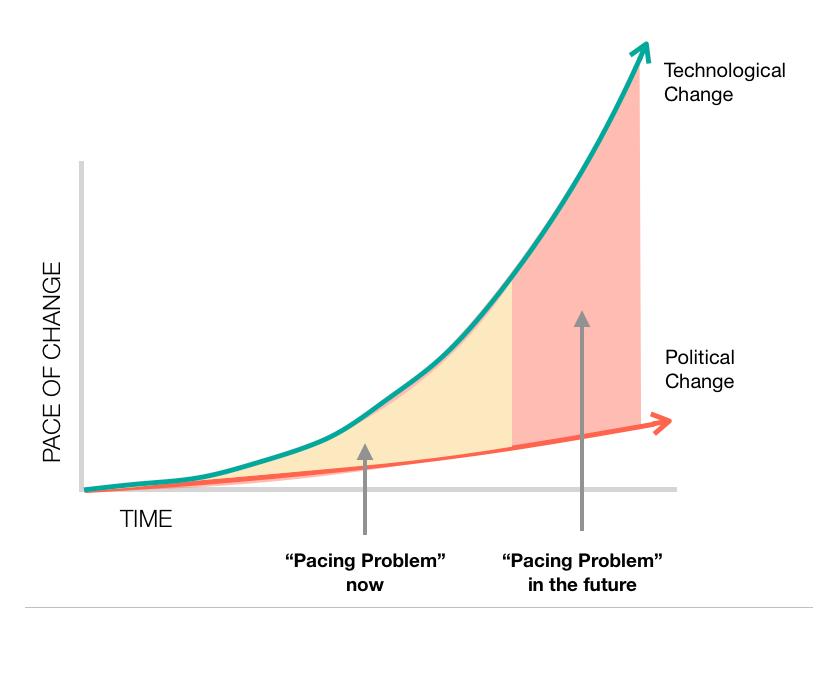
Figure 1: Technological Growth versus Legal Adaptation –
The Pacing Problem in AI Regulation
Interpretation:
As illustrated in Figure 1, the gap between technological advancement and legal adaptation continues to widen, creating regulatory uncertainty and challenges in governance. The image above depicts the “Pacing Problem.” Technological advancement has progressed at a much more rapid rate than political or legal advancement (represented by a declining line of technological change versus a gradual and linear pattern of political/legal change). At today’s point in time, the gap between technological advancement and legal requirements/the regulatory framework is presently moderate, but the graphical representation of these two curves demonstrates that in the future, there will be a widening divergence between the two. The result of a divergent technological curve and political/legal curve correlation creates a vacuum in regulating technology—meaning current laws are not widely sufficient to regulate new forms of technology.
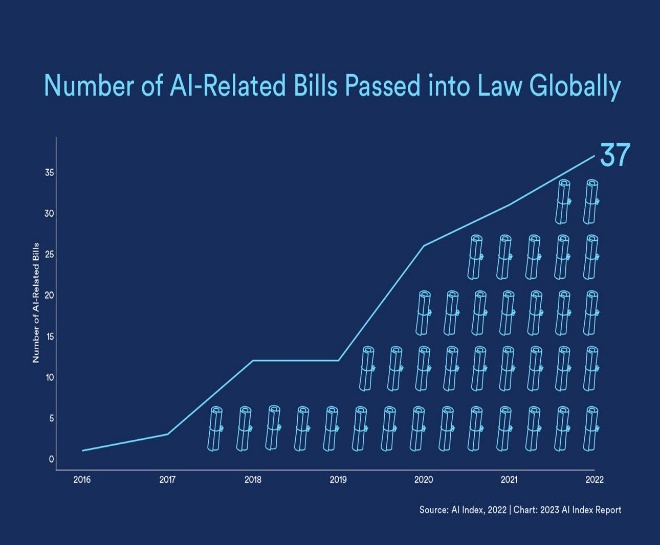
Figure 2: Global Growth in AI-Related Legislation (2016–2022)
Interpretation:
As illustrated in Figure 2, there is a steady increase in AI-related legislative activity globally. The upward trend shows that worldwide governments are increasingly recognizing the need for regulation of AIs.
The increase starting after 2019 suggests that the speed of advancement within AI technologies (especially in the areas of machine learning and generative AI) has caused a reaction from policymakers. But, even with the increase in AI-related laws, the total number of AI-related laws has remained relatively low compared to the rate at which technology has developed.
This disparity strengthens the argument that legal systems are still reacting to technological developments, rather than proactively creating a new regulatory framework. While this means there is movement among policymakers toward examining and addressing AI-related issues, the current rate of legislative action is still not fast enough to adequately regulate the many complexities associated with AIs, such as intellectual property (IP) issues.
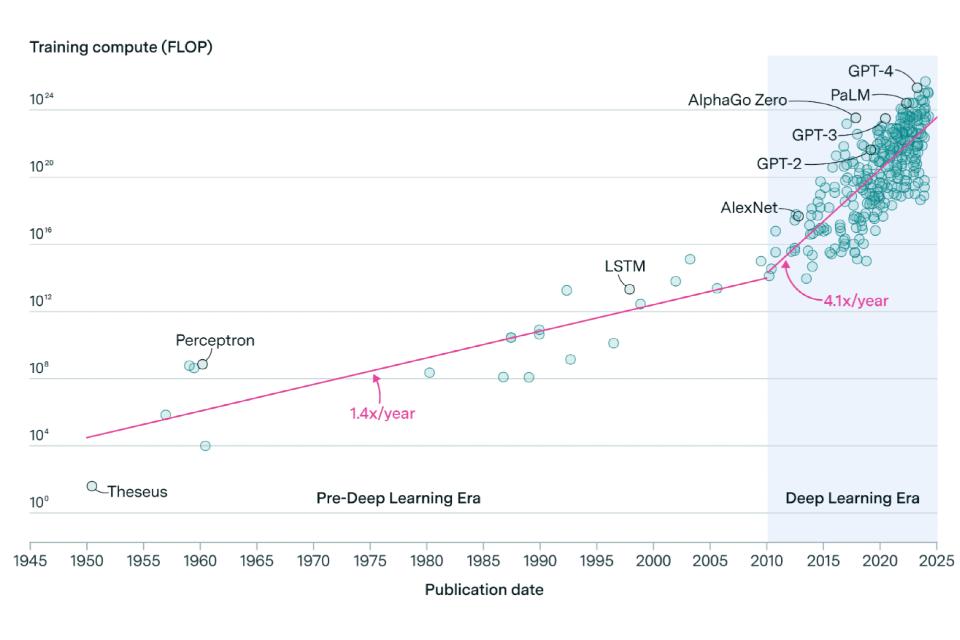
Figure 3: Exponential Growth in AI Training Compute and Model Complexity
Interpretation:
As illustrated in Figure 3, the computational power required for training AI models has increased exponentially over time. A.I. systems were once developed on a fairly small number of computational resources. But with the introduction of deep learning, we have seen a dramatic increase in the level of computational resources being used for A.I.
There are significant leaps in the period before deep learning, to the period of using deep learning. These leaps in capability result in complex technologies, such as GPT or AlphaGo that require extreme amounts of data and processing power. And in the last few years, we have seen an extreme rise in the use of AI before the deep learning era began.
As A.I. continues its rapid growth, it becomes increasingly difficult to distinguish between original and derivative works. With the growing computational capacity to create complex and increasingly lifelike works, legal challenges to existing laws will increase. As such, the exponential growth of AI in terms of processing capacity and complexity creates challenges for how Intellectual Property Law will treat AI in the future.
Comparative Legal Analysis:
| Jurisdiction | Approach | Strength | Limitation |
|---|---|---|---|
| USA | Human authorship required | Legal clarity | Excludes AI works |
| UK | Recognizes computer-generated works | Practical | Ambiguity |
| EU | AI Act under development | Future-oriented | Not implemented |
| India | No explicit framework | Flexible | Uncertainty |
Analysis:
The lack of a global unified legal standard has made it difficult for various nations to provide enforcement against infringement in other nations, which creates a fragmented legal environment.
Emerging Legal Challenges:
Integrating AI into the creative process has posed numerous legal challenges, including:
• Confusion regarding authorship
• Disputes over ownership
• Potential copyright infringement
• Lack of transparency in artificial intelligence
• Jurisdiction inconsistencies
Critical Insight:
These issues are related and require a comprehensive legal approach to addressing them all.
Towards an Accountability-Based Framework:
Traditional intellectual property law focuses on ownership, but in this case, a focus on the accountability of AI systems may provide a better way to regulate this form of creation.
Model Suggestion:
• Developers – Responsible for System Design
• Users – Responsible for Use
• Platforms – Responsible for Deployment
Argument:
This design will align responsibility for the control and influence over the AI system; therefore, it is a much more realistic legal model for the AI era.
Ethical and Economic Effects:
There are significant ethical implications of AI that may include: bias, transparency, and exploitation of creativity. From an economic perspective, AI has both the ability to disrupt traditional industries while creating new industries.
Insight:
To develop a legally enforceable plan, changes to law must consider both the ethical and economic consequences; therefore, creating integrity in the marketplace and community.
Risk vs Opportunity Analysis:
| Dimension | Risk | Opportunity |
|---|---|---|
| Creativity | Job displacement | Increased output |
| Data Use | Copyright issues | Knowledge access |
| Automation | Ethical concerns | Efficiency |
| Legal Gap | Misuse | Reform potential |
The recommendations for reforming laws concerning AI (Artificial Intelligence) are as follows:
1. To recognize works that are a result of AI assistance
2. To establish a clear system for data management
3. To provide just compensation for works created by AI
4. To create laws that are consistent across countries
5. To allow for adaptable laws when it comes to regulating modern technologies
The analysis presented in this study demonstrates that artificial intelligence represents not merely a technological advancement, but a structural shift that challenges the foundational principles of intellectual property law.
Conclusion:
AI will change the way we look at creativity and innovation in a profound way; thus, traditional forms of intellectual property protection will not be able to keep pace with new intellectual property issues that arise from AI-created content. Rather than trying to make AI fit into old legal frameworks, new lawmaking models are necessary that will provide a mechanism to hold parties accountable for AI-created content by linking responsibility with the party that had the most control or influence over the outcome. Ultimately, incorporating AI into copyright law is not only an issue of law, but also one of philosophy. And as technology advances, copyright law must adapt in a manner that equally balances the benefit of innovation while promoting equitable treatment of all creators, regardless of whether they are a human being or a technological development.
References:
Case Laws
Feist Publications, Inc. v. Rural Telephone Service Co., 499 U.S. 340 (1991).
Naruto v. Slater, 888 F.3d 418 (9th Cir. 2018).
Thaler v. Comptroller-General of Patents, [2023] UKSC 49.
Thaler v. Commissioner of Patents, [2021] FCA 879 (Australia).
Getty Images (US), Inc. v. Stability AI Ltd., High Court of Justice (UK, ongoing).
Andersen v. Stability AI Ltd., No. 3:23-cv-00201 (N.D. Cal. 2023).
Books
Abbott, R. (2020). The reasonable robot: Artificial intelligence and the law. Cambridge University Press.
Journal Articles
Abbott, R. (2016). I think, therefore I invent: Creative computers and the future of patent law. Boston College Law Review, 57(4), 1079–1126.
Ginsburg, J. C. (2003). The concept of authorship in comparative copyright law. DePaul Law Review, 52, 1063–1092.
Samuelson, P. (1986). Allocating ownership rights in computer-generated works. University of Pittsburgh Law Review, 47, 1185–1228.
Lemley, M. A. (2021). Fair learning. Texas Law Review, 99, 743–785.
Reports & Policy Documents
World Intellectual Property Organization. (2019). WIPO technology trends: Artificial intelligence. WIPO.
European Commission. (2021). Proposal for a regulation on artificial intelligence (Artificial Intelligence Act).
NITI Aayog. (2018). National strategy for artificial intelligence. Government of India.
Get an email when we publish new research and open calls for chapters.
Create a free account