
Chapter 25
AMAZON INDIA - STRATEGY BEHIND SELLING 4000 PRODUCTS EVERY MINUTE
- ISBN
- 978-81-963834-0-4
- Published
- 26 July 2026
- Accesses
- 27 views · 46 downloads
- Reading time
- ~10 min
Full text
AMAZON INDIA - STRATEGY BEHIND SELLING 4000 PRODUCTS EVERY MINUTE
MOHD HASEEB, VAISHAK KRISHNAN
IFIM College, Bangalore
Dr. VIDHYA PILLAI
Associate Professor, IFIM College, Bangalore
Abstract
The success of any business is dependent on the strategy/strategies that are deployed in the operation of such a business. Strategy is a critical determinant of business success. Amazon.com is one of the most successful brands in the world; the company has been in business for over two decades and has recorded unprecedented business success in human history. In this research work, the key strategy behind the success of Amazon will be extensively investigated. Given the unusual success rate of this organization over the past two decades and their high prospect for greater success, it becomes imperative to investigate the strategy behind this tremendous business success in-order to unveil and re-emphasize an established business principle that may not be obvious to many businesses. The purpose of this research is mainly to identify these strategies and extend further emphasis on the viability of such business strategies in order to strengthen existing research on the subject matter. Using the waterfall methodology, the history of the company will be reviewed, and the financial reports, company memos, press releases, etc., will be analyzed. The evolvement of the business from its inception as an online book retailer to its diversification into numerous other lines of business will be reviewed and analyzed.
Keywords: Business, Amazon, strategy, digital, payment
Introduction
Amazon India is an online shopping and digital payment platform owned and operated by Amazon.com, Inc. It is the largest e-commerce site in India, acting as a major competitor to other Indian e-commerce giants such as Flipkart, Snapdeal, and Paytm. It offers over 10 crore products across various categories including books, mobiles, apparel, electronics, beauty products, health products, home appliances, and many more. Amazon India also offers a digital payment service called Amazon Pay which allows customers to buy goods and services from the site and its affiliated sites. Amazon India’s customer base is growing rapidly, driven by the country’s expanding middle class, government initiatives to increase internet penetration, and the wide array of products available on its platform.
The History of Amazon
Amazon officially began in July 1995 by Jeff Bezos, who did not know much about the internet at
the time (even though he was a graduate of computer science) but came across a statistic that the internet was growing at 2300% and was convinced by these statistics to take advantage of the opportunity. However, he found that the Amazon brand was born on July 5, 1994, but officially commenced operation in 1995. The name Amazon.com was officially registered on November 1, 1994, by Jeff Bezos and his wife, after considering and registering domain names like Awake.com, Browse.com, Bookmall.com, and Relentless.com to choose the best name for the brand. He also found that the name Amazon.com (co-named after one of the largest rivers in the world) was chosen by the founder because it was fitting to his vision of building the largest online store in the world. Amazon first entered India in June 2013, when it launched Amazon.in to provide customers in India access to the company’s extensive selection of books, movies, music, and games. Later that same year, Amazon launched its Amazon Marketplace, enabling third-party sellers to sell products and ship directly to customers in India.
History of Amazon in India
In July 2014, Amazon announced plans to invest $2 billion in India, with a focus on expanding its selection, building infrastructure, and increasing its commitment to India. In 2015, Amazon launched its Amazon Prime subscription service in India, offering unlimited free one-day delivery and other benefits. By 2017, Amazon India had become the most visited e-commerce site in the country. In June 2017, Amazon expanded its presence in India with the launch of Amazon Video, an on-demand streaming service. That same year, Amazon initiated the Amazon Stores program, enabling sellers to create their own storefronts on Amazon. in. In 2019, Amazon made its biggest investment ever in India when it committed $5 billion to the Indian market. This includes investments in Amazon Pay, Amazon logistics, and warehouse space, as well as launching its Prime membership in India. In 2020, Amazon launched its Amazon India mobile app. The app has rapidly become one of the most popular online shopping apps in the country. The company has also launched the Amazon Fresh grocery delivery service, Amazon Pharmacy, and its Amazon Recharge online recharge service.
Rise of Amazon
Amazon was founded by Jeff Bezos in 1994 as an online bookstore. Initially, Amazon started with only a few products, such as books and CDs, but gradually grew and branched out into other areas. Within just a few short years, Amazon had become one of the world’s most successful online retailers. It expanded into many different product areas, such as electronics, appliances, toys, clothing, and health and beauty, and began offering services such as Amazon Prime and Amazon Web Services. Today, Amazon remains one of the most successful online companies, offering a wide range of products, services, and technologies to customers around the world. The company also continues to innovate and revolutionize retail and technology, creating new products and services to keep up with the changing times.
Business Model
Amazon's business model consists of four main activities:
- Marketplace: Amazon sells many products to customers. It offers a platform for third-party vendors to sell their products on its website. It also provides tools for vendors to make the selling
process easier.
- Fulfillment services: Amazon also provides fulfillment services for third-party vendors. This involves the storing and shipping of products to customers on behalf of sellers.
- Shopping Platform: Amazon owns the popular Shopping Platform called Amazon Prime. It provides its customers with free two-day shipping and other features such as product reviews, wish lists, and price comparisons.
- Amazon Web Services: Amazon provides cloud computing services to other companies. These services include storage, hosting, analytics, and machine learning. The advantage is that Amazon can provide its services on demand, so customers can reduce the cost of maintaining their IT infrastructure.
Marketing strategies
- Leverage Prime Membership: Amazon Prime members receive free two-day or one-day shipping and free streaming of movies and TV shows, as well as other benefits, like access to Amazon's Kindle library and discounts. The company has been focusing on creating a loyal community of Prime members, who are likely to spend more than non-members.
- Use Personalized Recommendations: Amazon uses individual customers' buying histories to recommend relevant items and create targeted advertisements, which leads to increased customer loyalty and sales.
- Participate in Advertising: Amazon is using both conventional and nonconventional advertising methods, including sponsoring its own products on various platforms and radio and TV commercials. This allows the company to get its products in front of a wider audience.
- Leverage social media: Amazon has a strong presence on many social media platforms. Through these accounts, the company can increase its customer base and introduce new offers and promotions.
- Leverage Data and AI: Amazon is leveraging data and artificial intelligence to personalize customer experiences, develop more relevant advertisements, and better anticipate demand.
- Utilize Amazon Marketplace: Amazon Marketplace allows third-party sellers to list their products on Amazon and provides various tools to help them increase sales and profitability.
Challenges of Amazon
- Keeping up with Demand: With many people now doing their shopping online, Amazon has seen a massive increase in demand for their services. To keep up with this demand, Amazon is constantly investing in new technology and infrastructure in order to process orders quickly and efficiently.
- Competition: Amazon is the largest online retailer in the world, but they still face stiff competition from other online retailers like Walmart and Target. These companies are investing heavily to develop their own e-commerce platforms which create more challenges for Amazon.
- Delivery Challenges: Amazon must ensure that they can get orders delivered quickly and conveniently. Many of their delivery challenges arise from having to use multiple carriers and needing to guarantee goods arrive on time.
- Security: With the massive amount of data that Amazon has about their customers, security is a major challenge for them. They are constantly investing in new security technologies and measures to ensure that customer data is well protected from hackers and other malicious actors.
- Low Margins: Amazon’s low margins make it difficult for them to compete on price with other retailers. They need to find creative ways to offer better value to customers in order to remain competitive.
Road Ahead
Amazon, the world's largest e-commerce company, has a bright future ahead of it. As the company continues to gain more market share and expand into new markets, it will be well positioned to remain a leader in the industry. With its vast resources and expertise, Amazon has the potential to continue to innovate and disrupt the traditional retail market, as well as offer more convenience and value to customers. Additionally, Amazon may expand into new areas, such as healthcare and financial services, as well as explore the possibility of delivering goods via drones or other autonomous robotic vehicles. With the right investments in technology, people and processes, Amazon could become an even more powerful force in the e-commerce space. Amazon started with bookstores, which soon converted to the top online retailer across the world, and currently, even though it has a lot of competition.
Conclusion
Amazon is an American international e-commerce company. It was started by Jeffrey P. Bezos in the year 1994. And it was launched in India in June 2013. Three years back, Amazon had no infrastructure in India, and now it dominates the Indian markets. So the main objective of the case is to study the challenges faced by Amazon India during the initial years and what strategy it followed to overcome the challenges. This case will also study the Business Models of Amazon India. At the very start, it was the perception of investors that India It will not go long like China as in the year 2004 when Amazon entered China it hasn’t seen much success there with Alibaba, its Chinese competitor, dominating the e-commerce market. After its bad run in China, Bezos is going all in for India. The fact behind the formation of Amazon in India was its huge headcounts
i.e. 1.25 billion four times as big as the U.S.’s and more than doubles Europe’s. Of these, 500 million, around 35 percent, are internet users. As per research, the yearly growth rate of internet users is the highest in India around six million users joining every month. Researchers expect the online shopping market in India to reach $15 billion by 2016 up from only $35 million in 2014. Amazon is known for its knowledgeable products. Amazon in India works on complex business challenges to innovate and create efficient solutions that enable various Amazon businesses, including Amazon websites across the world as well as support Payments, Transportation, and Digital products and services like the Kindle family of tablets, e-readers, and the store. The reasons for its success are the finest talent and strong leaders with proven experience working to make Amazon the Earth’s most customer-centric company. Apart from this Technological innovation drives the growth of Amazon, offering customers more selection, convenient shopping, and low prices.
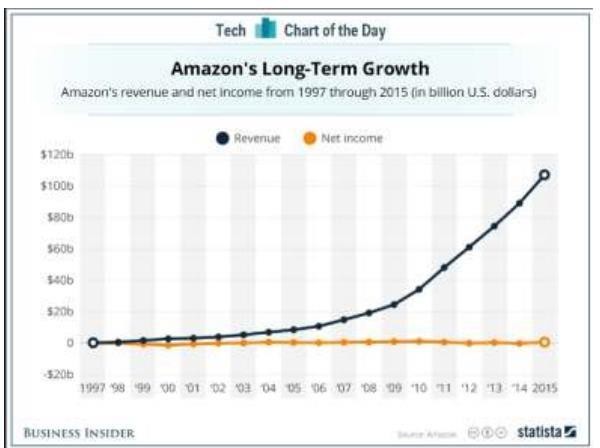
Exhibits of Amazon India
Reference
- Cennamo, Carmelo, Juan Santalo. 2013. Platform competition: Strategic trade-offs in platform markets. Strategic Management Journal 34(11) 1331–1350.
- Eisenmann, Thomas R., Geoffrey Parker, Marshall W. Van Alstyne. 2011. Platform envelopment. Strategic Management Journal 32(12) 1270–1285.
- E-Commerce or Internet Marketing: A Business Review from Indian Context‖, International Journal of u-and e- Service, Scie
- Miyazaki A.D. and Fernandez A. (2001), Consumer perceptions of privacy and security risks for online shopping, The Journal of Consumer Affairs, 35(1), pp 27-44.
- Rochet, Jean-Charles, Jean Tirole. 2003. Platform competition in two-sided markets. Journal of European Economic Association 1(4) 990–1029.
- Samadi M. and Yaghoob-Nejadi A. (2009), A Survey of the Effect of Consumers’ Perceived Risk on Purchase Intention in E-Shopping, Business Intelligence Journal –2(2), pp 261-275.
- https://hbr.org/2016/07/how-amazon-adapted-its-business-model-to-india
- https://m.yourstory.com/2016/06/jeff-bezos-amazon-india-china
- .http://www.businessinsider.in/Amazons-next-big-challenge-Winning-India/articleshow/48210306.cms
- http://fortune.com/amazon-india-jeff-bezos
- .https://psaddons.wordpress.com/2015/05/08/amazon-case-study-why-it-is-no-1-in-ecommerce/
- http://www.icmrindia.org/casestudies/catalogue/Business%20Strategy/BSTR466.htm
- https://www.quora.com/How-Amazon-adapted-its-business-model-to-India
Get an email when we publish new research and open calls for chapters.
Create a free account