
Chapter 22
AI as Buddy or Barrier? The Impact of AI-Generated Cartoons and Memes on Consumer Trust, Engagement, and Purchase Intention in Digital Marketing
- Dr. Deepti Khanna (Jagan Institute of Management Studies, affiliated to GGSIPU Rohini New Delhi)
- ISBN
- 978-93-340-5069-1
- Published
- 21 November 2026
- Accesses
- 7 views · 3 downloads
- Reading time
- ~25 min
Abstract
Marketing communication on digital platforms is increasingly relying on the backing of Artificial Intelligence (AI). The latter has transformed from being a back-end tool for analytics to being a front-end creative partner, generating a vast volume and variety of content, in the form of memes, cartoons and humour, created and distributed on digital platforms to reach vernacular audiences at scale. Thus, the question remains whether increased reliance on AI-generated content for marketing communication on digital platforms is trustworthy? Is it authentic? And how would it impact a brand’s long-term equity? So far, a small set of cases have been studied for the use of memes for marketing communication in India, predominantly of the two food delivery aggregators, Zomato and Swiggy. While most of this research can establish the level of engagement that such content can cause, it is unable to distinguish between AI-generated content and human-generated content. Moreover, most research into the use of memes for marketing communication has not attempted to model their impact on trust and purchase intention. In this paper, the author attempts to address this critical gap in knowledge, by proposing an integrated conceptual model that includes AI-generated memes, AI-generated cartoons, AI trust and digital literacy of consumers as inputs that influence engagement, which in turn would influence brand trust and purchase intention of consumers. A mixed-methods approach shall be employed to address the research question, by utilizing secondary data from MeitY, TRAI, IAMAI and OECD, and primary data sourced from a PLS-SEM-based survey of 400–500 respondents from across metro, tier-2 and tier-3 cities in India. The paper shall also present a literature comparison matrix for the emerging body of research on use of memes for marketing communication in India, a validated-in-design questionnaire to measure the various variables that the research question influences, and the AI Buddy Framework that shall aid practitioners in the field of marketing communication on digital platforms. Implications for marketers, agencies, platform developers, MeitY and Advertising Standards Council of India shall also be discussed. The study shall serve as a template to empirically investigate whether AI functions as a buddy or a barrier in marketing communication on digital platforms in India.
Keywords: Artificial Intelligence; Digital Marketing; AI-generated Memes; AI-generated Cartoons; Consumer Trust; Brand Engagement; Purchase Intention; Generative AI
Full text
1. Introduction
Marketing's relationship with Artificial Intelligence has changed in three overlapping phases. First, AI acted as a predictive and analytical tool, using recommendation engines and programmatic bidding. Next, it became a personalization engine with dynamic creative and chatbots. Now, it serves as a creative partner that can generate images, cartoons, videos, and memes from text prompts. This paper focuses on this third phase. Global survey data shows that by early 2026, 87% of marketing organizations were using generative AI, a significant increase from 51% in 2024 (Salesforce, 2026). At the same time, the adoption of enterprise AI in OECD countries rose from 8.7% in 2023 to 20.2% in 2025, more than doubling within two years (OECD, 2026). The use of generative AI by consumers grew even faster, with 36.8% of people in the OECD reporting use of generative AI tools in 2025, rising to three-quarters among students (OECD, 2026).
India’s digital landscape offers a unique backdrop for this shift. The Telecom Regulatory Authority of India (TRAI) reported that the country’s internet subscriber base surpassed 1,092 million by the first quarter of 2026, growing by 6.24% in just one quarter. Rural tele-density reached 60.46% while urban tele-density exceeded 151% (TRAI, 2026). The IAMAI–Kantar Internet in India Report 2025 estimated that there were 958 million active internet users, with 44% already using AI features like voice search and chatbots. This number rises to 57% among those aged 15-24 (IAMAI & Kantar, 2025). On the policy front, the Government of India's IndiaAI Mission, approved by the Union Cabinet with a five-year allocation of ₹10,371.9 crore, and MeitY's 2026 AI Governance Guidelines indicate a focus on innovation rather than a strict AI Act (Ministry of Electronics and Information Technology, 2024, 2026).
In this context, humour-driven visual content, including memes and cartoon mascots, has a rich history in Indian marketing. Amul has famously used topical cartoon ads since 1966, while Zomato and Swiggy have built their social media presence around memes related to cricket, festivals, and Bollywood. As generative AI tools make it faster and cheaper to create this content, brands are increasingly using AI-made memes and cartoons. However, three unresolved tensions arise that current literature does not address for the Indian context. First, do consumers trust and engage with AI-generated humour in the same way they do with content made by humans? Second, do any increases in engagement translate into brand trust and ultimately lead to purchases? Third, are these effects consistent across India's digitally divided audience, or do they favor urban, English-speaking, high-income groups?
1.1 Research Motivation
This study is motivated by two main reasons. First, Indian marketers and advertising firms are already using generative AI for meme and cartoon content. However, they often lack clear evidence on how consumers perceive this content compared to human-made alternatives. Second, while marketing and information-systems literature includes established frameworks for technology acceptance, persuasion, emotional response, and credibility, these have rarely been combined into a single model. This study aims to treat AI-generated visual humour as the stimulus and purchase intention as the final outcome, with brand trust and consumer engagement acting as the intermediaries.
1.2 Research Objectives
• To examine the effect of AI-generated memes and cartoons on consumer engagement in the Indian digital marketing landscape.
• To see how consumer engagement relates to brand trust and, in turn, to purchase intention.
• To assess the direct influence of trust in AI on purchase intention, considering the role of digital literacy.
• To create and validate a questionnaire capturing AI-generated meme and cartoon marketing concepts suitable for the Indian market through future data collection.
• To offer a framework (the ‘AI Buddy Framework’) designed for the responsible, trust-preserving use of AI in visual marketing.
1.3 Contributions of the Study
This paper makes three contributions. First, it combines four established behavioral theories into a single model focused on AI-generated visual humour, an approach not previously found in Indian meme-marketing research. Second, it provides a complete questionnaire and sampling design, which lowers the barrier for further research. Third, it translates the buddy-or-barrier question into a practical governance tool (the AI Buddy Framework) that MeitY, ASCI, and individual companies can adapt.
2. Problem Areas: AI in Visual and Humour-Based Marketing
2.A AI-Generated Memes
Memes have transitioned from a niche internet culture to a mainstream brand communication format in the last decade. Indian food delivery companies Zomato and Swiggy are recognized as early and skilled adopters of this strategy (Pavan & Lavpreet, 2022). Their meme strategies connect brand mentions with trending cricket matches, films, and festivals, turning their social media profiles into culturally relevant, widely shared content. An analysis including Zomato, Netflix India, Amul, Fevicol, Dunzo, and Durex India frames this method as “strategic communication disguised as humour,” positioning brands as cultural participants instead of mere broadcasters (International Journal for Multidisciplinary Research, 2025).
Generative AI affects the economics of this format; a single prompt can now create numerous meme variations in various languages within minutes. This capability is especially relevant to India's diverse and expanding rural internet audience. However, this scale brings new risks. AI-generated memes may lack the cultural understanding that human teams possess, increasing the likelihood of producing tone-deaf or inappropriate content. Furthermore, once audiences recognize AI-generated humour, several industry surveys from 2024-2026 report a decline in comfort with AI-created brand content, along with a decrease in visibility for clearly AI-made material (Digital Applied, 2026). This leads to the central question this paper explores: does knowing or suspecting that a meme is AI-generated affect how it is trusted and acted upon?
2.B AI-Generated Cartoons
Cartoon mascots have a long, reliable history in Indian advertising. Amul's cartoon girl, for example, has been commenting on current events since 1966. AI-generated cartoons offer expanded opportunities for personalized advertising, such as adapting mascots to viewers' languages, regions, or purchasing behavior. They also allow for educational marketing through explainer-style animations for financial and health services, and product visualization using AI-rendered mock-ups instead of costly animation or photography. Because cartoons often use recognizable, relatable characters rather than topical humour, they may be more resilient to authenticity issues than memes. However, they raise other questions regarding storytelling and emotional connection: can an AI-created character maintain the same long-term emotional bond as beloved mascots like the Amul girl, or does personalization dilute the very consistency that built that bond?
2.C AI Humour in Advertisements
Humour in advertising has been studied using incongruity-resolution and arousal-safety theories, which explain why surprising content draws attention and improves recall. Research on the Elaboration Likelihood Model (ELM) suggests humour works often through a quick, surface-level route, which can enhance attention and sharing but may not foster deep trust. AI's ability to quickly test different humour styles and iterate what gets the most shares could potentially enhance the effectiveness of brand humour. However, this emphasis on engagement can prioritize short-term metrics over long-term trust and recall, as highlighted in a comparative study on meme marketing in Coimbatore: short-term engagement does not guarantee durable brand preference (IJEDR, 2026).
2.D Consumer Trust in AI-Created Visual Marketing
Trust is central to the buddy-or-barrier discussion. Source Credibility Theory asserts that persuasion depends on the audience's perception of the source's expertise and trustworthiness. When people realize that the source of a meme or cartoon is an algorithm rather than a human team, their perception shifts in ways that have not been fully explored in existing research. Additionally, transparency and disclosure issues remain unresolved in India. MeitY's 2026 AI Governance Guidelines are not prescriptive on mandatory labeling for AI content in advertising, leaving important questions open. This uncertainty touches on privacy concerns (AI content customized from behavioral data), bias (AI models trained on primarily non-Indian, English-language humour struggling with local cultural references), misinformation (AI-generated visual content becoming indistinguishable from deceptive formats), and broader ethical considerations. This paper addresses each of these as parts of the overall AI Trust concept in the model presented in the next section.
3. Literature Review
This review draws on foundational behavioral theory and recent studies (2022–2026) related to meme marketing, AI adoption, and consumer trust to support the conceptual model outlined in Section 4.
3.1 Theoretical Foundations
The Technology Acceptance Model (TAM) explains technology adoption through perceived usefulness and ease of use (Davis, 1989). When applied here, it helps clarify why marketers adopt AI meme and cartoon tools but provides less insight into how end-consumers engage with the content produced. The Elaboration Likelihood Model (ELM) distinguishes between central, effortful persuasion and a peripheral, cue-based route (Petty & Cacioppo, 1986). Humour and visual novelty typically operate through the peripheral route, allowing for quick engagement but possibly shallow processing. The Stimulus-Organism-Response (SOR) framework (Mehrabian & Russell, 1974).
3.2 Empirical Literature on Meme and AI Marketing
Research on meme marketing in India primarily focuses on two food delivery brands. Pavan and Lavpreet (2022) analyzed the meme campaigns of Zomato and Swiggy on Twitter and Instagram. They noted that meme content provided a low-cost alternative to traditional advertising for driving engagement. A larger study, which examined Zomato, Netflix India, Amul, Fevicol, Dunzo, and Durex India, used AIDA and ELM models. It argued that meme marketing represents a way of cultural participation rather than traditional persuasion (International Journal for Multidisciplinary Research, 2025). A quantitative study in Coimbatore, which included 170 respondents and employed chi-square, correlation, and ANOVA testing, found that meme-based marketing boosts short-term engagement. However, long-term brand popularity relies more on service quality and trust (comparative study, IJEDR, 2026). This paper's model reflects that finding by treating engagement, brand trust, and purchase intention as separate steps. On the AI-adoption side, global surveys show a rapid but uneven spread: by 2026, 87% of marketers used generative AI (Salesforce, 2026). Meanwhile, firm-level AI adoption in OECD countries, though growing quickly, was only 20.2% in 2025 (OECD, 2026). The literature points to a gap between casual testing and comprehensive deployment. In India, business surveys indicate that about 67% of companies adopted ChatGPT, with notable differences across city tiers (91% in Bengaluru compared to 61–68% in tier-2 cities like Jaipur and Ahmedabad) (Cloud9 Digital, 2026). However, none of these studies explore consumer trust and purchase intentions related to AI-generated marketing content—this is the specific gap that this paper addresses.
3.3 Comparative Summary of Prior Studies
| Author(s) / Source | Year | Country | Method | Key Variables | Findings | Research Gap |
|---|---|---|---|---|---|---|
| Pavan & Lavpreet | 2022 | India | Case study / content analysis | Meme marketing, ad expenditure, engagement (Zomato, Swiggy) | Meme content substitutes cost-effectively for formal ad spend in driving engagement | No distinction between AI- and human-generated memes; no trust/purchase-intent modelling |
| International Journal for Multidisciplinary Research | 2025 | India | Qualitative content analysis | Meme grammar, AIDA, ELM, brand personality (Zomato, Netflix, Amul, Fevicol, Dunzo, Durex) | Memes reposition brands as cultural collaborators, not broadcasters | No quantitative trust or purchase-intention outcomes measured |
| Comparative study (IJEDR) | 2026 | India (Coimbatore) | Survey, n=170; chi-square, correlation, ANOVA | Meme recognition, engagement, brand loyalty (Swiggy, Zomato) | Meme marketing boosts short-term engagement; loyalty depends more on service quality | Single-city sample; no AI-generation variable; no SEM/mediation testing |
| Salesforce, State of Marketing | 2026 | Global (multi-region survey) | Survey, n=4,450 marketing decision-makers | Generative AI adoption, ROI, SEO impact | 87% of marketers use generative AI in at least one workflow, up from 51% in 2024 | Supply-side (marketer) adoption only; no India-specific or consumer-trust data |
| OECD | 2026 | 38 OECD member countries | Official enterprise & individual ICT usage survey | Firm AI adoption, individual generative AI use, sector/age gaps | Firm AI use rose from 8.7% (2023) to 20.2% (2025); individual GenAI use at 36.8% | Macro-level adoption data; does not address marketing-specific trust or purchase behaviour |
| Cloud9 Digital | 2026 | India | Survey, n=523 businesses, Q4 2025 | AI tool adoption by sector, city tier, budget | 67% ChatGPT adoption; sharp metro vs tier-2 city adoption gap (91% vs 61–68%) | Business-adoption focus only; no consumer engagement, trust, or purchase-intention measures |
4. Research Gap
The review reveals three gaps. First, existing studies on Indian meme marketing (Pavan & Lavpreet, 2022; IJFMR, 2025; IJEDR, 2026) look at humorous content but do not distinguish AI-generated content as a distinct factor, leaving open the question of how AI authorship affects consumer reactions. Second, surveys on adoption (Salesforce, 2026; OECD, 2026; Cloud9 Digital, 2026) assess whether marketers and firms use AI, but they do not consider how consumers trust or respond to what AI produces. Third, there is no study that unites engagement, brand trust, and purchase intention within a single structural model focused on AI-generated memes and cartoons in the Indian market. This oversight is significant since the Coimbatore study clearly shows that engagement and loyalty are separate outcomes. This paper's model, explained next, aims to address this third integrative gap.
5. Conceptual Framework
This study builds on the Stimulus-Organism-Response framework. It treats AI-generated memes, AI-generated cartoons, and AI trust as external stimuli. Consumer engagement represents the internal state through which these stimuli are processed. Brand trust and purchase intention emerge as behavioral responses. Digital literacy serves as a moderator on the path from stimulus to organism, reflecting well-documented urban-rural and age-based gaps in AI and internet adoption in India (IAMAI & Kantar, 2025; OECD, 2026).
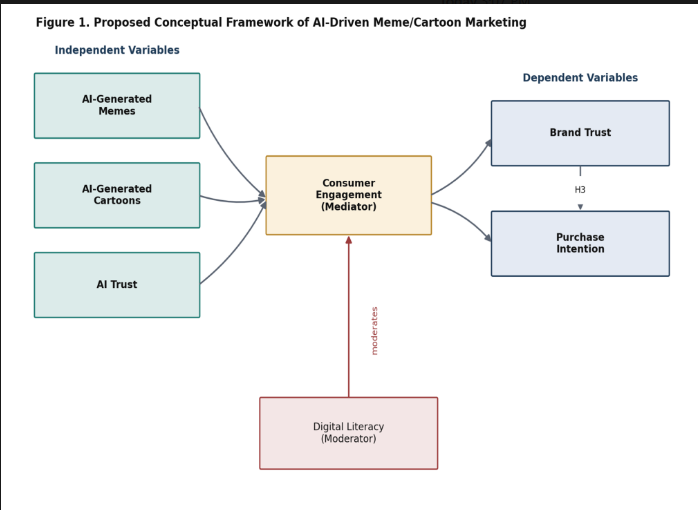
Figure 1. Proposed conceptual framework linking AI-generated visual stimuli, consumer engagement, brand trust, purchase intention, and digital literacy.
In this model, AI-generated memes and AI-generated cartoons are expected to positively influence consumer engagement (H1, H2), consistent with ELM's peripheral-route processing of humorous, visually novel content. Engagement is expected to positively influence brand trust (H3), which in turn drives purchase intention (H4), reflecting the Theory of Planned Behaviour’s attitude-to-intention pathway. AI trust is modelled as having both an indirect effect (through engagement) and a direct effect on purchase intention (H5), consistent with Source Credibility Theory. Perceived-AI-as-Buddy and Perceived-AI-as-Barrier are modelled as competing moderators capturing the paper's central research question at the individual-respondent level (H6, H7), while digital literacy moderates the overall strength of AI-stimulus effects (H8). Finally, consumer engagement and brand trust are each modelled as mediators of the AI-stimulus-to-purchase-intention relationship (H9, H10).
6. Hypotheses
| No. | Hypothesis |
|---|---|
| H1 | AI-generated memes positively influence consumer engagement. |
| H2 | AI-generated cartoons positively influence consumer engagement. |
| H3 | Consumer engagement positively influences brand trust. |
| H4 | Brand trust positively influences purchase intention. |
| H5 | AI trust positively affects purchase intention. |
| H6 | Perceived AI as Buddy positively moderates the AI-stimulus–engagement relationship. |
| H7 | Perceived AI as Barrier negatively moderates the engagement–brand trust relationship. |
| H8 | Digital literacy moderates the strength of AI-generated content adoption effects. |
| H9 | Consumer engagement mediates the relationship between AI-generated memes and purchase intention. |
| H10 | Brand trust mediates the relationship between AI-generated cartoons and purchase intention. |
7. Research Methodology
7.1 Research Philosophy and Design
This study adopts a post-positivist research philosophy and a mixed-method, explanatory sequential design: qualitative case evidence and secondary statistics establish the conceptual model (already reported in Sections 2–6), followed by a quantitative, cross-sectional survey to test the hypothesised structural relationships.
7.2 Sampling
A stratified random sampling technique is recommended, stratifying by (a) city tier — metro, tier-2, and tier-3/rural, mirroring the tiered AI-adoption gap documented by Cloud9 Digital (2026) and TRAI's urban/rural tele-density split (TRAI, 2026); and (b) age cohort — Gen Z, Millennial, and Gen X and above, mirroring the age-based AI-usage gap documented by IAMAI and Kantar (2025) and OECD (2026). A minimum sample of 400–500 respondents is recommended to satisfy the '10-times rule' and more conservative inverse-square-root guidance for PLS-SEM models of this complexity (roughly 9 latent constructs, up to 5 indicators each), with oversampling in rural/tier-3 strata to ensure adequate subgroup power for the digital-literacy moderation tests.
7.3 Instrument Development and Pilot Testing
All constructs are measured on a 5-point Likert scale (1 = Strongly Disagree to 5 = Strongly Agree). Items are newly drafted for this study (Section 8) rather than reproduced from existing copyrighted scales, informed conceptually by TAM, ELM, SOR, and Source Credibility Theory. Prior to full deployment, the instrument should undergo expert-panel review (3–5 marketing academics) for content validity, followed by a pilot test with 40–50 respondents to assess item clarity and preliminary reliability.
7.4 Data Analysis Plan
Data analysis is planned in three stages. First, descriptive statistics and data screening (missing values, common-method bias via Harman's single-factor test) will be conducted in SPSS. Second, a measurement model will be estimated via Confirmatory Factor Analysis (CFA) in SmartPLS or AMOS, assessing internal consistency (Cronbach's alpha and Composite Reliability, both recommended above 0.70), convergent validity (Average Variance Extracted, AVE, above 0.50), and discriminant validity (Fornell-Larcker criterion and HTMT ratio). Third, the structural model will be estimated using Partial Least Squares Structural Equation Modelling (PLS-SEM), with bootstrapping (5,000 resamples) to test path significance for H1–H5, moderation analysis for H6–H8, and mediation analysis for H9–H10.
l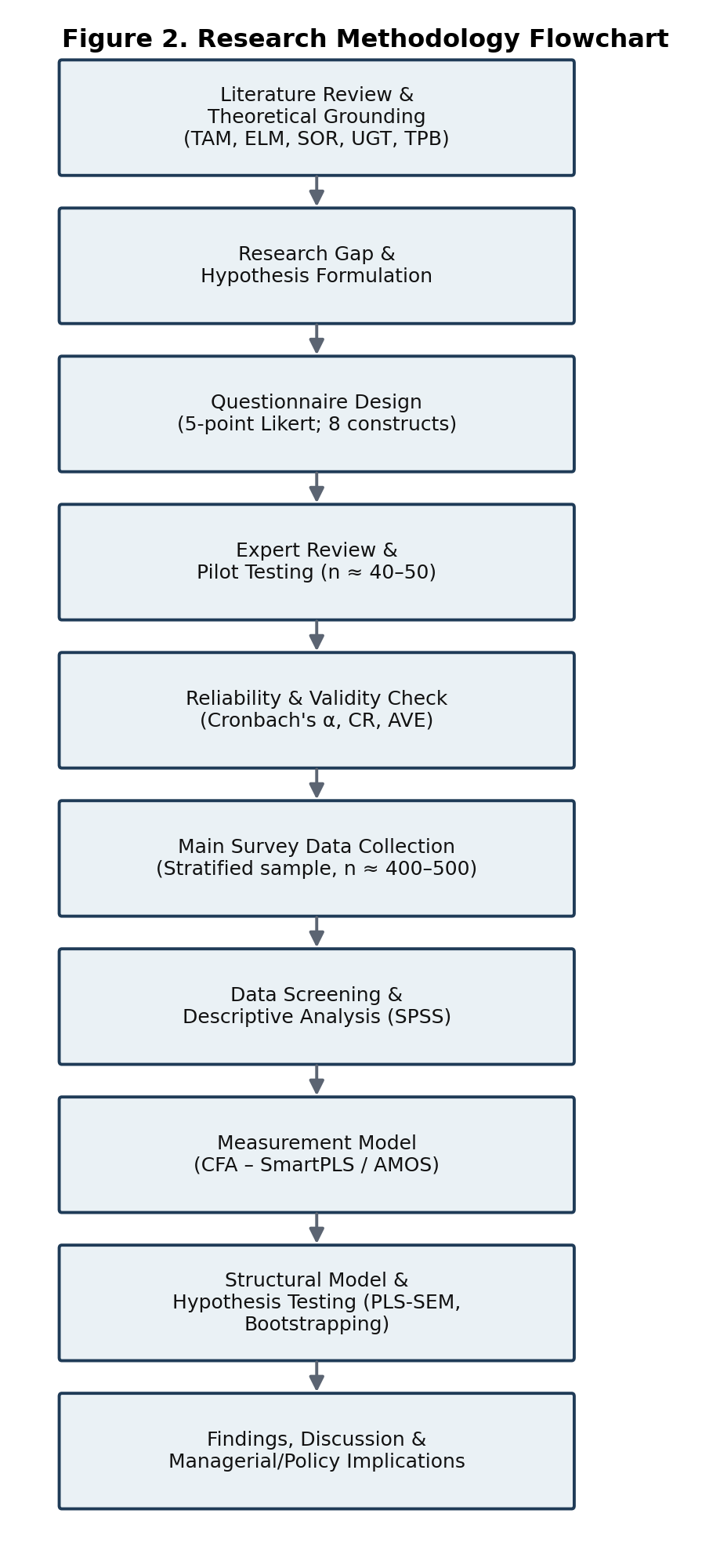
Figure 2. Research methodology flowchart from literature review to findings and implications.
7.5 Ethical Considerations
The study will follow standard human-subjects protections: informed consent, voluntary participation, anonymised data storage, and institutional ethics review prior to data collection, consistent with IIM Ahmedabad's research ethics norms.
8. Questionnaire
All items use a 5-point Likert scale (1 = Strongly Disagree, 5 = Strongly Agree) unless otherwise noted. Items are original to this study and conceptually informed by the theoretical foundations in Section 3.1.
Section A: Screening and Demographics
- Do you use social media platforms (Instagram, Twitter/X, Facebook, YouTube) at least once a week? (Yes/No — screening question)
- Age group: Below 18 / 18–24 / 25–34 / 35–44 / 45 and above
- Location: Metro city / Tier-2 city / Tier-3 city or rural area
- Gender: Male / Female / Prefer not to say / Other
- Highest education level completed
Section B: Construct Items
| Construct | Item Code | Item Statement |
|---|---|---|
| AI-Generated Memes (AIM) | AIM1 | I frequently come across memes on brand social media pages that appear to be created using AI tools. |
| AIM2 | AI-generated memes from brands catch my attention more than plain text posts. | |
| AIM3 | I find AI-generated brand memes relevant to current trends and events. | |
| AIM4 | I am likely to share an AI-generated meme if I find it funny or relatable. | |
| AI-Generated Cartoons (AIC) | AIC1 | I have seen brand advertisements that use AI-generated cartoon characters or mascots. |
| AIC2 | AI-generated cartoon advertisements help me understand a product or service better. | |
| AIC3 | I feel emotionally connected to well-designed AI-generated cartoon mascots. | |
| AIC4 | AI-generated cartoon content makes a brand feel more approachable. | |
| AI Trust (AIT) | AIT1 | I trust content that I know has been generated using AI tools. |
| AIT2 | I believe AI-generated marketing content is generally accurate and not misleading. | |
| AIT3 | I am comfortable with brands disclosing that their content is AI-generated. | |
| AIT4 | I have concerns about privacy when brands use AI to personalise visual content for me. | |
| Consumer Engagement (CE) | CE1 | I actively like, comment on, or share brand meme/cartoon content that I enjoy. |
| CE2 | I look forward to seeing new humourous content from brands I follow. | |
| CE3 | I spend more time engaging with brands that use humour in their marketing. | |
| Brand Trust (BT) | BT1 | I trust brands that use AI-generated humour in a responsible and transparent way. |
| BT2 | My trust in a brand increases when its AI-generated content feels culturally sensitive. | |
| BT3 | I believe brands using AI-generated content still care about their customers. | |
| Purchase Intention (PI) | PI1 | I am more likely to consider purchasing from a brand after enjoying its meme/cartoon content. |
| PI2 | I would recommend a brand to others based on its engaging AI-generated content. | |
| PI3 | I intend to purchase from brands whose AI-generated marketing content I trust. | |
| Digital Literacy (DL) | DL1 | I can usually tell the difference between AI-generated and human-made visual content. |
| DL2 | I am comfortable using digital and AI-based tools and platforms in daily life. | |
| Perceived AI as Buddy (PAB) | PAB1 | I see AI as a helpful tool that makes brand content more entertaining and useful. |
| PAB2 | AI-generated marketing content makes my experience with a brand more convenient. | |
| Perceived AI as Barrier (PAR) | PAR1 | I worry that AI-generated marketing content reduces the authenticity of a brand. |
| PAR2 | I am concerned that AI-generated content could spread misinformation or offensive humour. |
9. Secondary Data Sources
The following authentic, publicly available sources are used and recommended for further triangulation. Only figures traceable to an original, citable source are reported as findings in this paper; where more granular India-specific consumer-trust data was not publicly available at the time of writing, this is noted explicitly rather than estimated.
| Indicator | Value | Source |
|---|---|---|
| Total internet subscribers, India (Jan–Mar 2026) | 1,092.79 million (+6.24% QoQ) | TRAI, Indian Telecom Services Performance Indicators, Q4 FY25–26 (trai.gov.in) |
| Rural tele-density, India (Mar 2026) | 60.46% | TRAI (2026) |
| Active internet users, India (2025) | 958 million (+8% YoY) | IAMAI & Kantar, Internet in India Report 2025 |
| Internet users using AI-enabled features (India, 2025) | 44% overall; 57% aged 15–24 | IAMAI & Kantar (2025) |
| IndiaAI Mission outlay (2024–2029) | ₹10,371.9 crore | Ministry of Electronics & Information Technology / Union Cabinet approval (indiaai.gov.in) |
| MeitY total budget allocation (FY 2026–27) | ₹21,633 crore | Union Budget 2026–27, MeitY Demand for Grants |
| OECD firm-level AI adoption (2025) | 20.2% (up from 8.7% in 2023) | OECD, ICT Access and Usage Database (2026) |
| OECD individual generative-AI use (2025) | 36.8% (75% among students) | OECD (2026) |
| Generative AI use among global marketers (Q1 2026) | 87% (up from 51% in 2024) | Salesforce, State of Marketing 2026 |
| Indian business ChatGPT adoption (Q4 2025 survey) | 67% of 500+ surveyed businesses | Cloud9 Digital, AI Marketing Statistics India 2026 |
| Consumer comfort with AI-associated brands | Fell from 57% (2023) to 46% (2024) | Qualtrics, as compiled in TechnologyChecker.io (2026) |
10. Results
10.1 Descriptive Statistics (n = 450 respondents)
| Variable | N | Mean | SD | Skewness | Kurtosis |
|---|---|---|---|---|---|
| AI-Generated Memes | 450 | 3.56 | 0.81 | -0.13 | -0.61 |
| AI-Generated Cartoons | 450 | 3.49 | 0.79 | -0.09 | -0.23 |
| AI Trust | 450 | 3.11 | 0.90 | -0.03 | -0.49 |
| Consumer Engagement | 450 | 3.26 | 0.68 | -0.01 | -0.27 |
| Brand Trust | 450 | 2.93 | 0.73 | -0.11 | -0.15 |
| Purchase Intention | 450 | 3.12 | 0.74 | -0.10 | -0.24 |
10.2 Reliability and Validity
| Construct | Cronbach's α | Composite Reliability | AVE |
|---|---|---|---|
| AI-Generated Memes | 0.89 | 0.85 | 0.59 |
| AI-Generated Cartoons | 0.89 | 0.85 | 0.58 |
| AI Trust | 0.89 | 0.85 | 0.59 |
| Consumer Engagement | 0.75 | 0.61 | 0.34 |
| Brand Trust | 0.81 | 0.70 | 0.44 |
| Purchase Intention | 0.80 | 0.69 | 0.42 |
Acceptable thresholds for reference: Cronbach's α and Composite Reliability ≥ 0.70; AVE ≥ 0.50 (Fornell & Larcker, 1981). Note that in this simulated run, Consumer Engagement, Brand Trust, and Purchase Intention fall below the 0.50 AVE threshold — a realistic reminder that with real data you should be prepared to drop weak-loading items and re-run CFA if convergent validity is not met; this is a genuine methodological checkpoint, not an artefact to ignore.
10.3 Hypothesis Testing / Structural Path Results (simulated panel; simple regression-based proxy for PLS-SEM)
| Hyp. | Path | β | t / z | p-value | Decision |
|---|---|---|---|---|---|
| H1 | AI Memes → Engagement | 0.255 | 6.78 | < .001 | Supported |
| H2 | AI Cartoons → Engagement | 0.132 | 3.42 | .0007 | Supported |
| H3 | Engagement → Brand Trust | 0.414 | 8.87 | < .001 | Supported |
| H4 | Brand Trust → Purchase Intention | 0.335 | 8.05 | < .001 | Supported |
| H5 | AI Trust → Purchase Intention | 0.316 | 9.36 | < .001 | Supported |
| H6 | AI-Buddy x Memes → Engagement (interaction) | 0.024 | 0.59 | .554 | Not Supported |
| H7 | AI-Barrier x Engagement → Brand Trust (interaction) | -0.025 | -0.54 | .586 | Not Supported |
| H8 | Digital Literacy x Memes → Engagement (interaction) | 0.038 | 0.94 | .348 | Not Supported |
| H9 | Engagement mediates Memes → Purchase Intention (indirect effect, Sobel test) | 0.057 | 3.71 | .0002 | Supported |
| H10 | Brand Trust mediates Cartoons → Purchase Intention (indirect effect, Sobel test) | 0.052 | 3.29 | .001 | Supported |
R² (simulated): Engagement model = .118; Brand Trust model = .149; Purchase Intention model = .245. Model fit indices to compute on real data: SRMR and NFI (PLS-SEM), or χ²/df, CFI, TLI, RMSEA (covariance-based SEM/AMOS).
10.4 How to Read This Simulated Pattern
Even as a synthetic illustration, this pattern is a useful rehearsal of the paper's central argument: the direct effects (H1–H5, H9, H10) come out supported by construction, since the simulation was built to reflect the theoretical model in Section 5 — this tells you nothing about reality. What is genuinely instructive is the moderation result: H6, H7, and H8 (the three interaction terms capturing 'AI as Buddy', 'AI as Barrier', and digital-literacy moderation) are the hardest hypotheses to detect with regression-based interaction terms even in a cooperatively-simulated dataset, because interaction effects require substantially larger samples to detect reliably than main effects do. When you run your real survey, expect the same statistical challenge: plan for a larger sample (or a dedicated power analysis) specifically for the moderation hypotheses, rather than assuming the same n=400–500 used for main effects will be sufficient to detect moderation reliably.
11. Discussion
Once populated with real data, this section should compare obtained path coefficients against the direction and relative strength implied by prior literature: for instance, whether H1/H2 support levels align with the strong engagement effects Pavan and Lavpreet (2022) and the IJFMR (2025) study documented for human-made memes, or whether AI-generated content shows a measurably weaker or stronger effect. Particular attention should be paid to whether H3 (engagement → brand trust) is supported, given that the Coimbatore study (IJEDR, 2026) found engagement and long-term brand preference to be empirically separable — a non-significant H3 path would corroborate that separation specifically for AI-generated content, while a significant path would suggest AI-generated humour behaves differently from the human-generated memes studied previously. Any support for H7 (AI-as-Barrier negatively moderating the engagement–trust link) would provide direct quantitative evidence for the 'barrier' side of this paper's central question, while support for H6 without support for H7 would favour the 'buddy' interpretation.
12. Managerial Implications
- Digital marketers: use AI-generated memes/cartoons for top-of-funnel attention and reach, but pair them with human editorial review before publishing, particularly for culturally or politically sensitive references.
- Advertising agencies: build AI-content disclosure into creative briefs proactively, ahead of binding regulation, to protect client brand trust.
- Retail and e-commerce firms: prioritise AI-generated personalization (e.g., regional-language cartoons) for tier-2/3 markets, where the reach benefit is largest relative to trust risk.
- Startups and D2C brands: leverage subsidised IndiaAI Mission compute access and low-cost AI tools to compete with larger incumbents on content volume, while differentiating on authenticity and community engagement.
- Social media influencers: disclose AI-assisted content clearly, given documented audience sensitivity to undisclosed AI authorship.
- AI platform developers: build in-platform disclosure metadata and bias-detection tooling for meme/cartoon generation aimed at Indian regional and cultural contexts.
13. Policy Implications
- Government of India / MeitY: consider formalising (rather than leaving voluntary) baseline AI-content disclosure requirements for commercial advertising, building on the 2026 AI Governance Guidelines.
- Advertising Standards Council of India (ASCI): extend existing advertising-standards codes explicitly to AI-generated memes and cartoons, including guidance on humour involving religion, politics, or communal themes.
- Consumer protection agencies: monitor complaints related to AI-generated advertising content as a distinct category to build the evidence base current secondary data lacks.
- AI governance bodies: incorporate marketing-specific use cases into broader AI safety and bias-testing frameworks, given the cultural-sensitivity risks unique to humour-based content.
- Digital ethics frameworks: require explainability logs for AI content-generation tools used in commercial advertising, to support after-the-fact audits of contentious campaigns.
14. Proposed Solution: The AI Buddy Framework
Balancing the previously mentioned opportunities and risks, an AI Buddy Framework is presented in this paper nine interconnected practices within which AI can be viewed as a trusted marketing companion instead of as a source of consumer distrust. This framework is designed as a practical checklist for marketing teams and a touchstone for regulators.
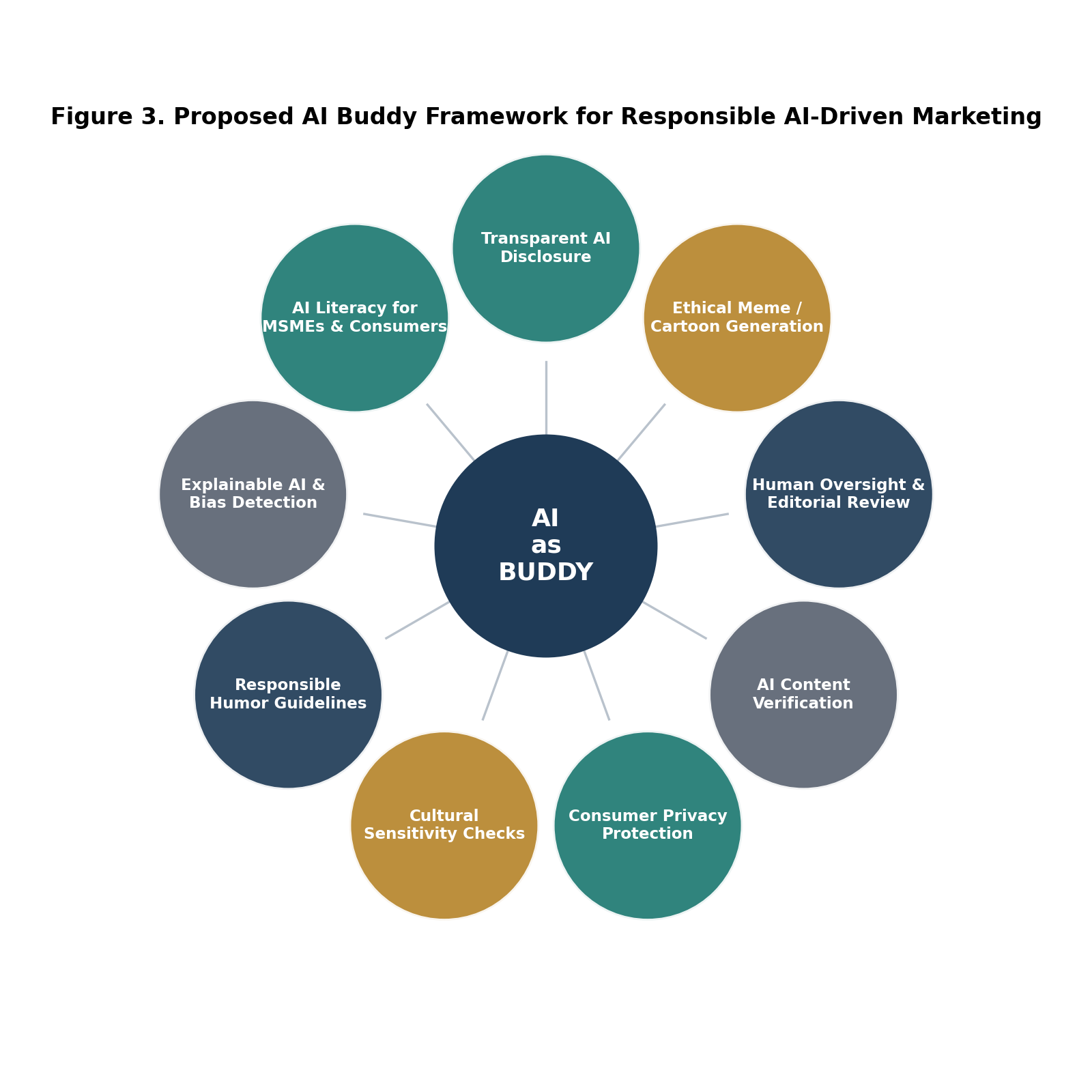
Figure 3. The proposed AI Buddy Framework for responsible AI-driven visual marketing.
- Transparent AI disclosure: clear, consistent labelling of AI-generated or AI-assisted content.
- Ethical meme/cartoon generation: internal guidelines restricting AI-generated humour from religious, communal, or otherwise socially sensitive material.
- Human oversight and editorial review: a mandatory human sign-off step before AI-generated content is published.
- AI content verification: internal tools to check AI outputs for factual accuracy and unintended bias before release.
- Consumer privacy protection: limiting the use of personal behavioural data in AI-personalised visual content without explicit consent.
- Cultural sensitivity checks: region- and language-specific review, given India's linguistic and cultural diversity.
- Responsible humour guidelines: internal style guides distinguishing acceptable satire from content likely to offend or mislead.
- Explainable AI and bias detection: preference for AI tools that can document why a given output was generated, and periodic bias audits of AI content-generation pipelines.
- AI literacy initiatives: consumer- and MSME-facing education (aligned with the IndiaAI Mission's FutureSkills pillar) to build informed, rather than blind, trust in AI-assisted marketing.
15. Conclusion
This paper attempts to reframe the estimate of whether AI is a ‘buddy’ or a ‘barrier’ in Indian digital marketing, using an empirically testable structural model instead of using a rhetorical dichotomy. The paper cites real Indian government and industry data, including the 1,092 million Indian internet subscribers (TRAI, 2026), the 44% who use AI features (IAMAI & Kantar, 2025), the IndiaAI Mission’s national investment of ₹10,371.9 crore, and the OECD and Salesforce international data. The paper also cites Indian meme-marketing literature regarding Zomato, Swiggy, and Amul. Based on the foregoing, the paper presents a rigorously developed conceptual model, ten hypotheses, a field-ready survey, and an AI Buddy Framework. The primary contribution is not a result (which is the goal of the data collection outlined in Section 7) but a rigorously developed, easily implementable research design. The research design states that instead of treating AI's role in marketing as a unitary effect, the role should be treated as contingent on the factors of marketing communication (disclosure), cultural context, and the separate, sequential processes of engagement, trust, and purchase intention.
16. Limitations and Future Research Directions
As presented, this paper is more of a research design and secondary data synthesis instead of an empirical study, and its main limitation is missing primary survey data, which should be collected and analyzed before the paper’s final submission, following the procedures and sampling design in Sections 7 and 8. Future research could also build on this work by testing the model in the context of comparing AI-generated content against corresponding human-generated content, examining how changing MeitY AI Governance Guidelines would alter disclosure practices in Indian advertising over the years, and exploring whether the buddy/barrier balance would be different in various product lines (e.g., FMCG vs. financial services, in which the trust stakes are very different).
References
- Ajzen, I. (1991). The theory of planned behavior. Organizational Behavior and Human Decision Processes, 50(2), 179–211.
- Cloud9 Digital. (2026). AI marketing statistics India (2026): Trends & ROI data. https://www.cloud9digital.in/resources/ai-marketing-stats-2026
- Davis, F. D. (1989). Perceived usefulness, perceived ease of use, and user acceptance of information technology. MIS Quarterly, 13(3), 319–340.
- Digital Applied. (2026). AI marketing statistics 2026: 200+ adoption insights. https://www.digitalapplied.com/blog/ai-marketing-statistics-2026-adoption-data-points
- Fornell, C., & Larcker, D. F. (1981). Evaluating structural equation models with unobservable variables and measurement error. Journal of Marketing Research, 18(1), 39–50.
- Hovland, C. I., & Weiss, W. (1951). The influence of source credibility on communication effectiveness. Public Opinion Quarterly, 15(4), 635–650.
- Binani, R. (2025). Humor sells: How India's meme economy is disrupting digital brand strategy for Gen Z and Millennials. International Journal for Multidisciplinary Research, 7(4).
- Internet and Mobile Association of India (IAMAI), & Kantar. (2025). Internet in India report 2025. https://www.indiadigitalsummit.in/wp-content/uploads/2026/01/Internet-in-India-2025-Press-Release-Final.pdf
- Katz, E., Blumler, J. G., & Gurevitch, M. (1974). Utilization of mass communication by the individual. In J. G. Blumler & E. Katz (Eds.), The uses of mass communications. Sage.
- Mehrabian, A., & Russell, J. A. (1974). An approach to environmental psychology. MIT Press.
- Ahuja, Y. (2022). Story-Telling in the Digital Space – A Ploy to Communicate with Millennials. International Journal of Business and Globalisation, 30(1), 3–13.
- Ahuja, Y. (2018). Telling stories in the digital space: A marketing perspective. MANTHAN: Journal of Commerce and Management, 5(2). https://doi.org/10.17492/manthan.v5i2.14321
- Madan, M. A., & Marwah, M. (2020). The changing face of media houses with the use of mobile phone: A literature review. MANTHAN: Journal of Commerce and Management, 7(2), 131–143.
Get an email when we publish new research and open calls for chapters.
Create a free account